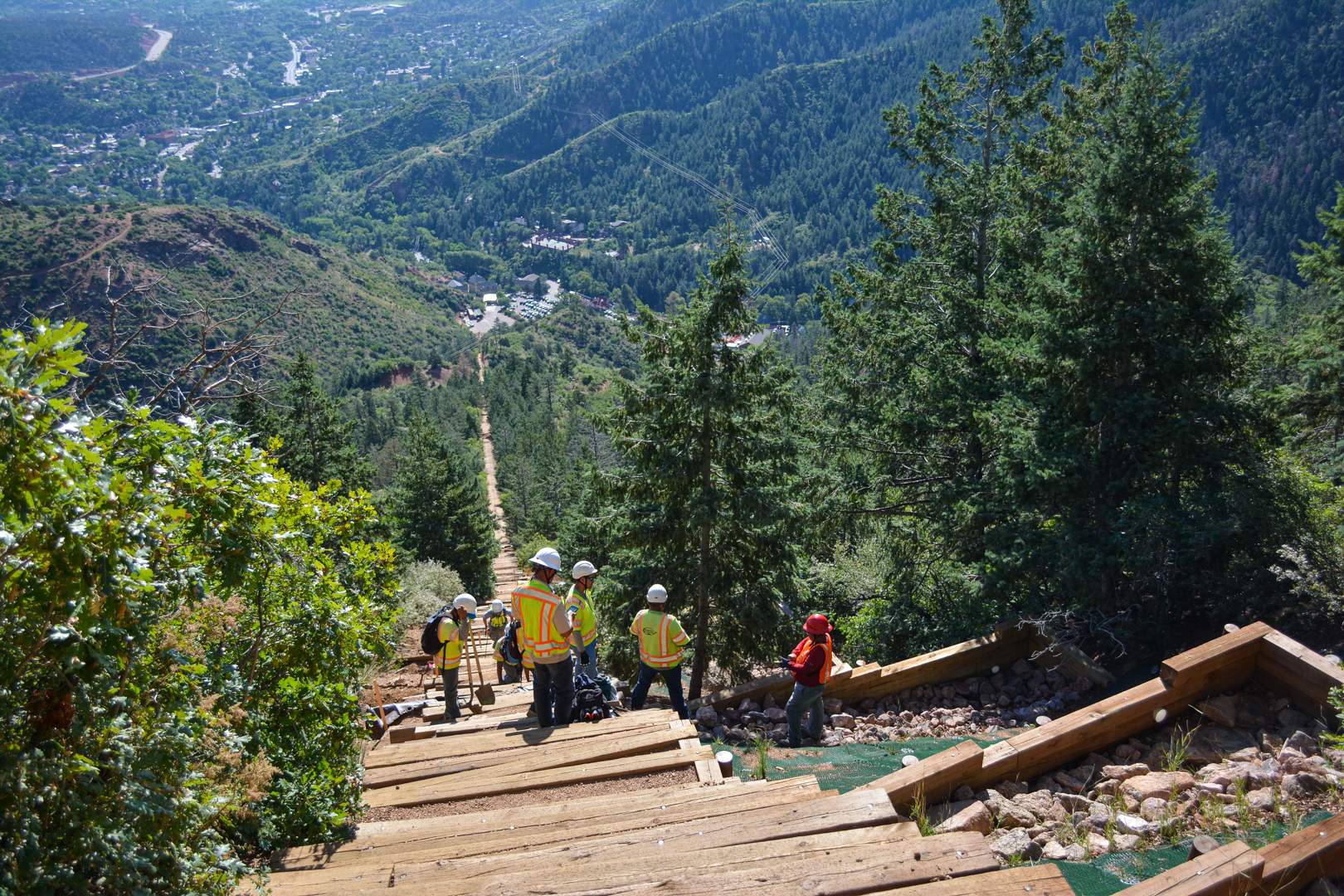
The Manitou Incline isn’t just a trail—it’s one of Colorado’s most iconic and demanding outdoor experiences. Rising nearly 2,000 feet in less than a mile, this former railway turned stair-stepped fitness challenge has drawn hikers from around the world for decades.
Between 2014 and 2017, Timberline Landscaping supported the multi-phase reconstruction of the Incline, completing work across Phase I, Phase II, and Phase III. Each phase focused on restoring stability, improving safety, and protecting the long-term sustainability of the trail under extreme use and harsh mountain conditions.
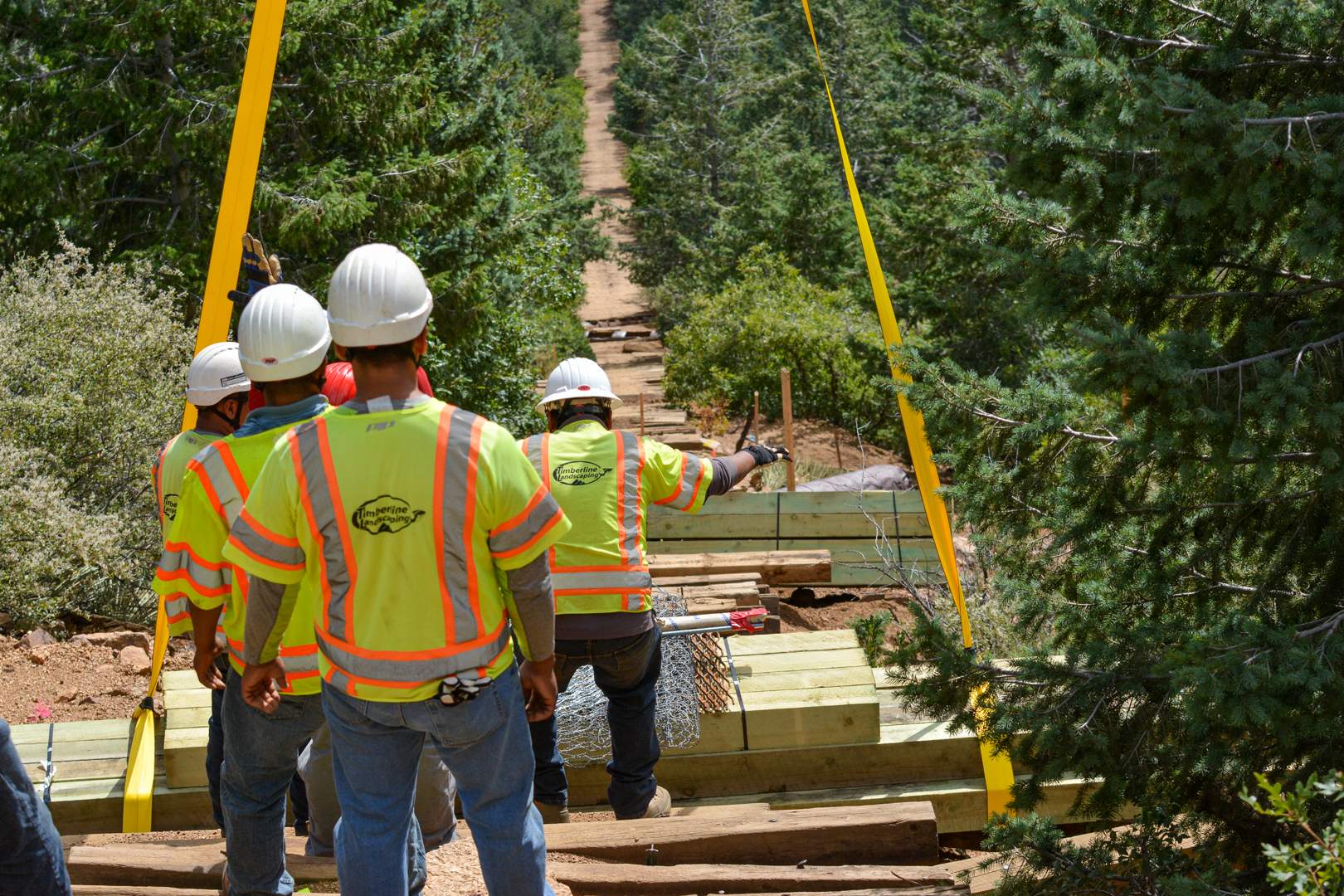
What began as targeted restoration work evolved into a years-long effort to preserve a landmark that sits at the heart of Colorado Springs recreation history. Behind every timber tie and stabilized slope was a crew working in one of the most physically demanding job sites in the region—often hauling materials up steep terrain and working in constantly changing mountain conditions.
Table of Contents
TL;DR: What was it like for the crew working on the Manitou Incline rebuild?
Answer:
Three Phases, One Legendary Climb
Phase I (2014): Stabilizing the Foundation
Phase I marked the beginning of the major restoration effort.
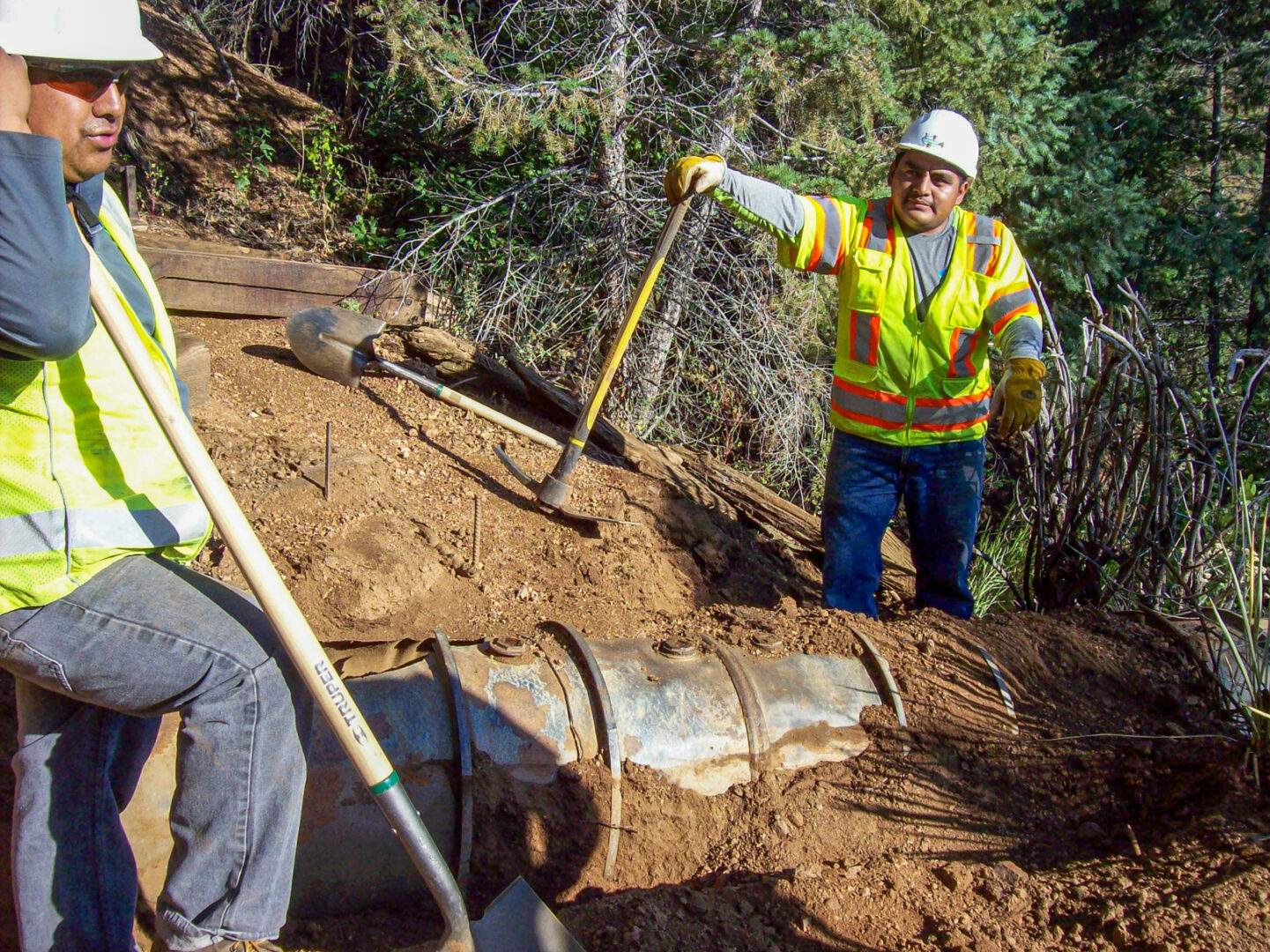
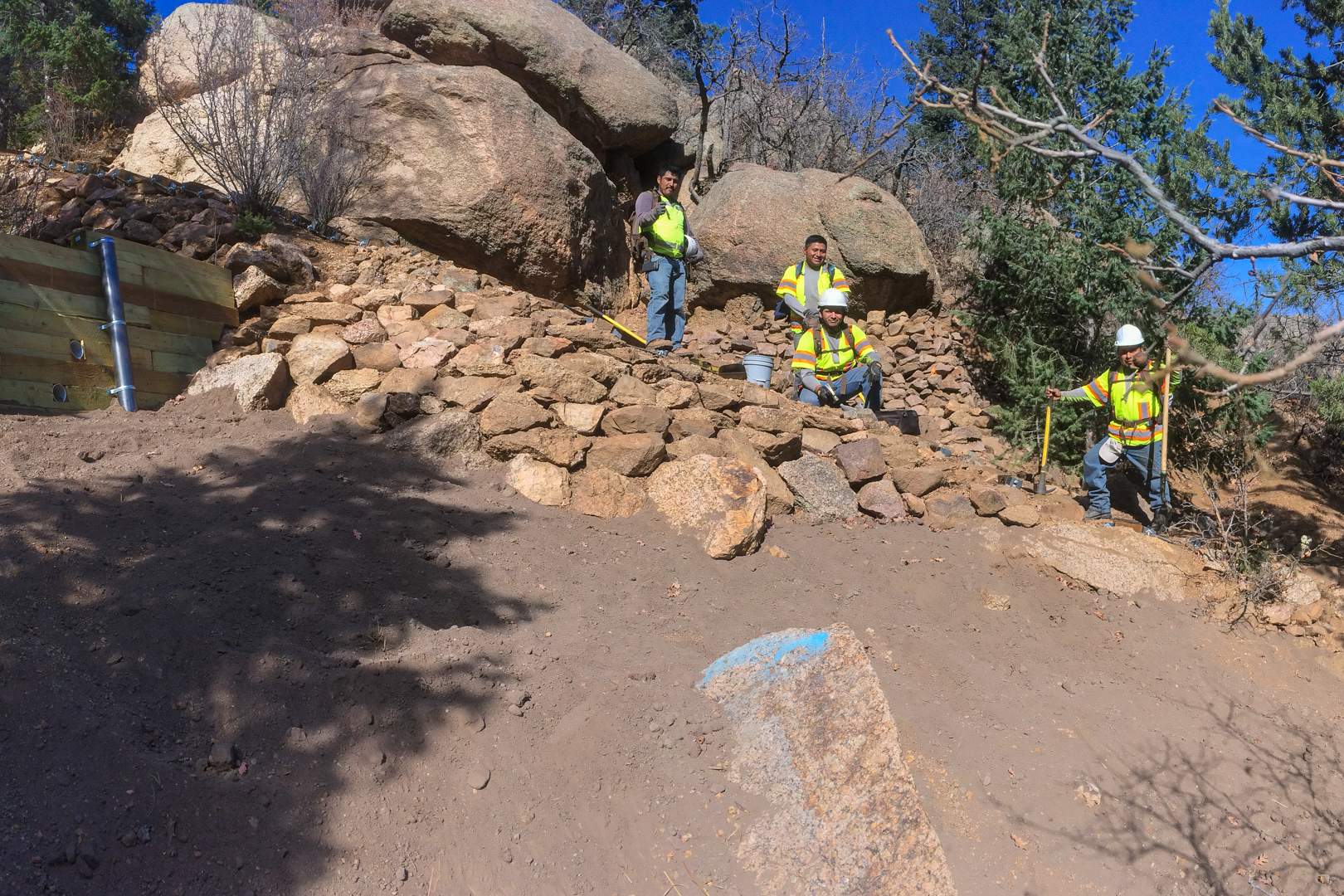
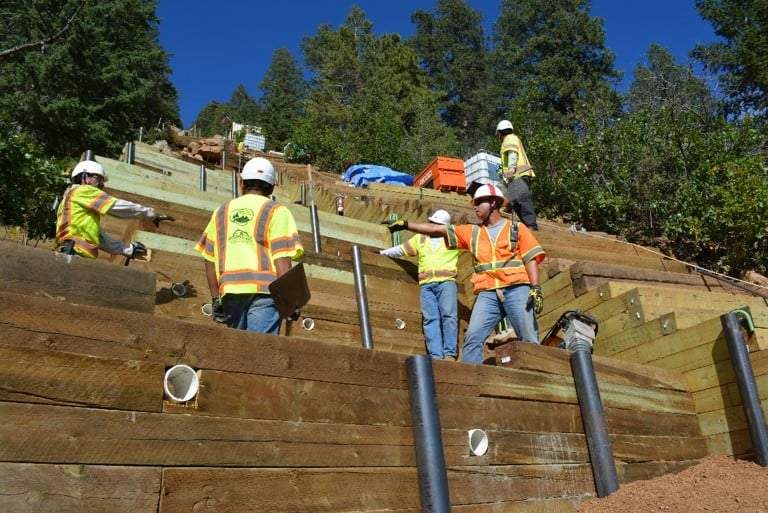
Work focused on the lower sections of the Incline, where heavy use and erosion had caused significant wear over time. Timberline crews installed structural reinforcements, built retaining systems, and began addressing long-term slope stability.
This phase set the foundation for everything that followed—turning a deteriorating trail into a structurally sound system capable of handling intense daily traffic.
Phase II: Expanding Erosion Control & Durability
Phase II continued the momentum, focusing on expanding erosion control measures and reinforcing additional sections of the trail.
Crews worked deeper into the system of railroad ties, improving drainage and stabilizing areas that had begun to shift under constant foot traffic and weather exposure.
Each improvement wasn’t just about fixing damage—it was about preventing the next round of it.
Phase III (2017): The Final Push to the Summit
Phase III brought the most challenging work of the entire project, focusing on the upper portions of the Incline near the false summit and top sections.
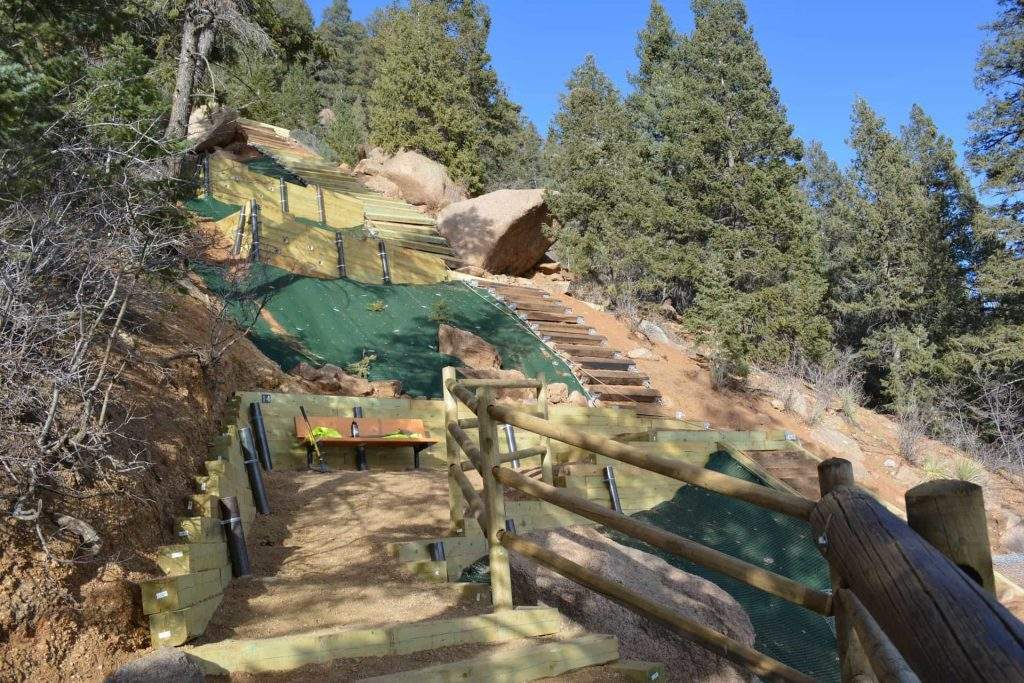
According to project reporting, crews installed anchoring systems, improved drainage infrastructure, and reinforced retaining structures in some of the steepest and most exposed terrain on the trail.
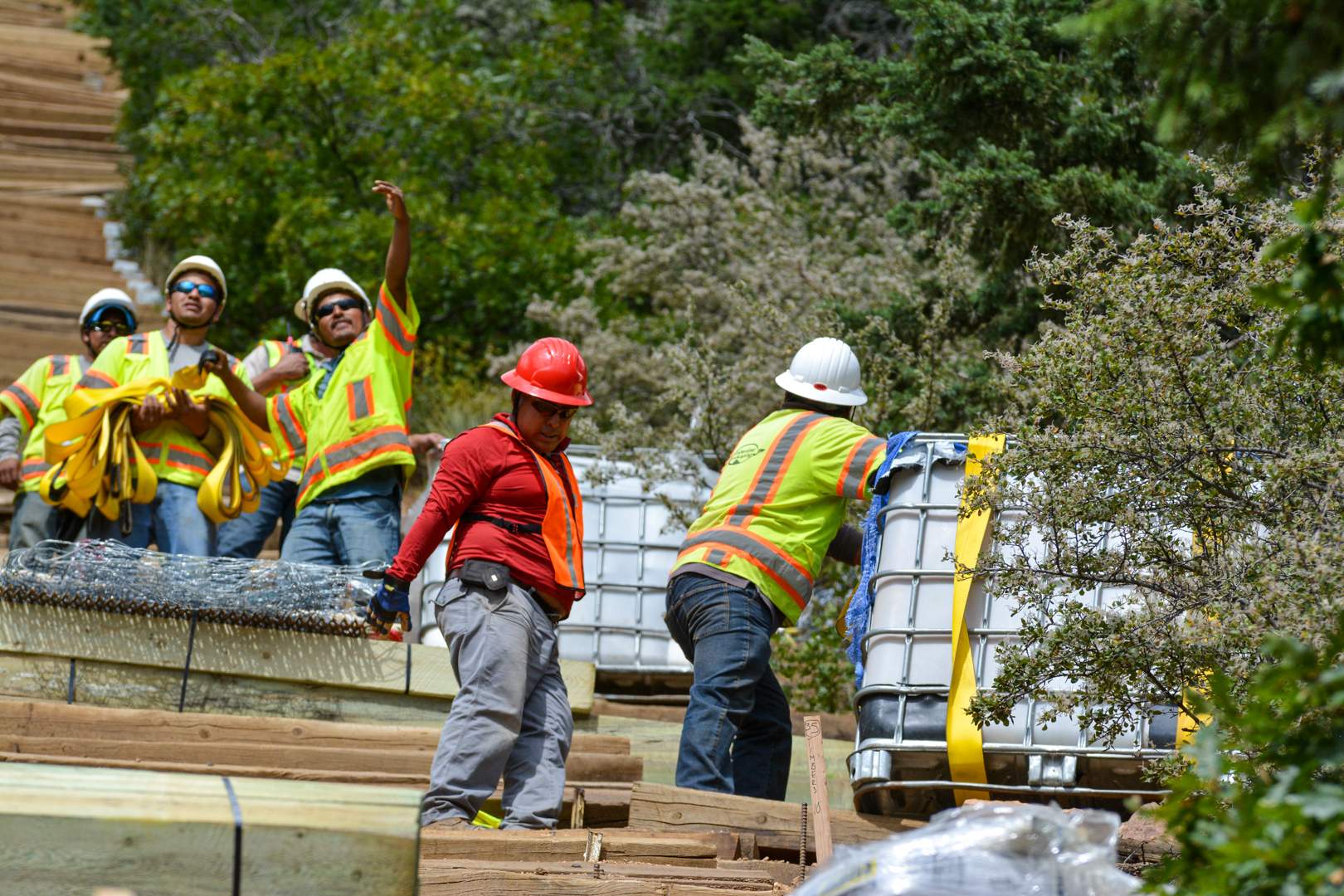
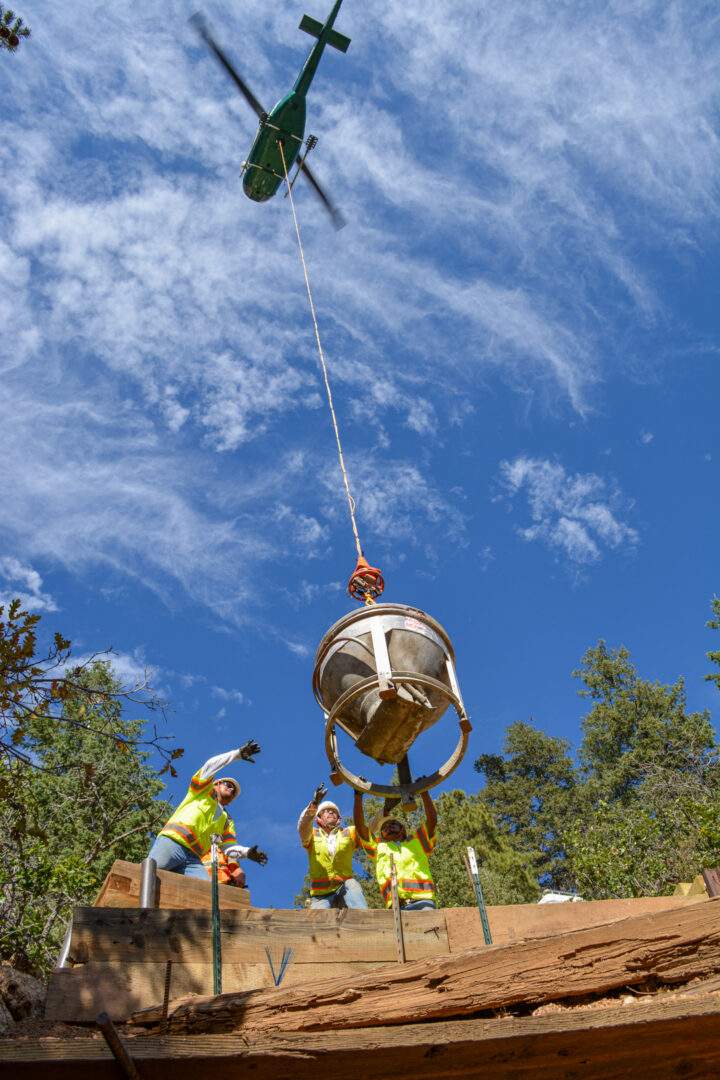
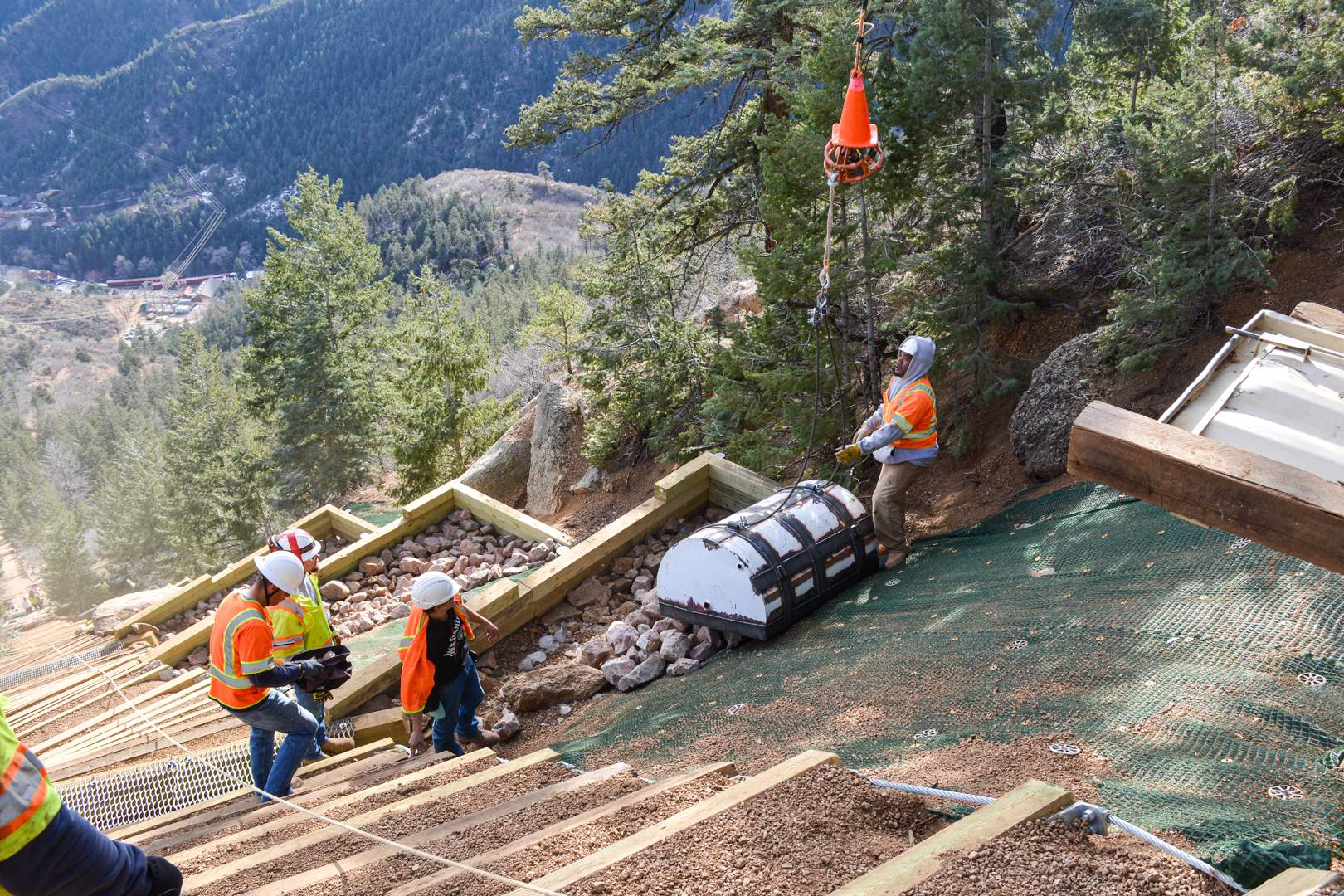
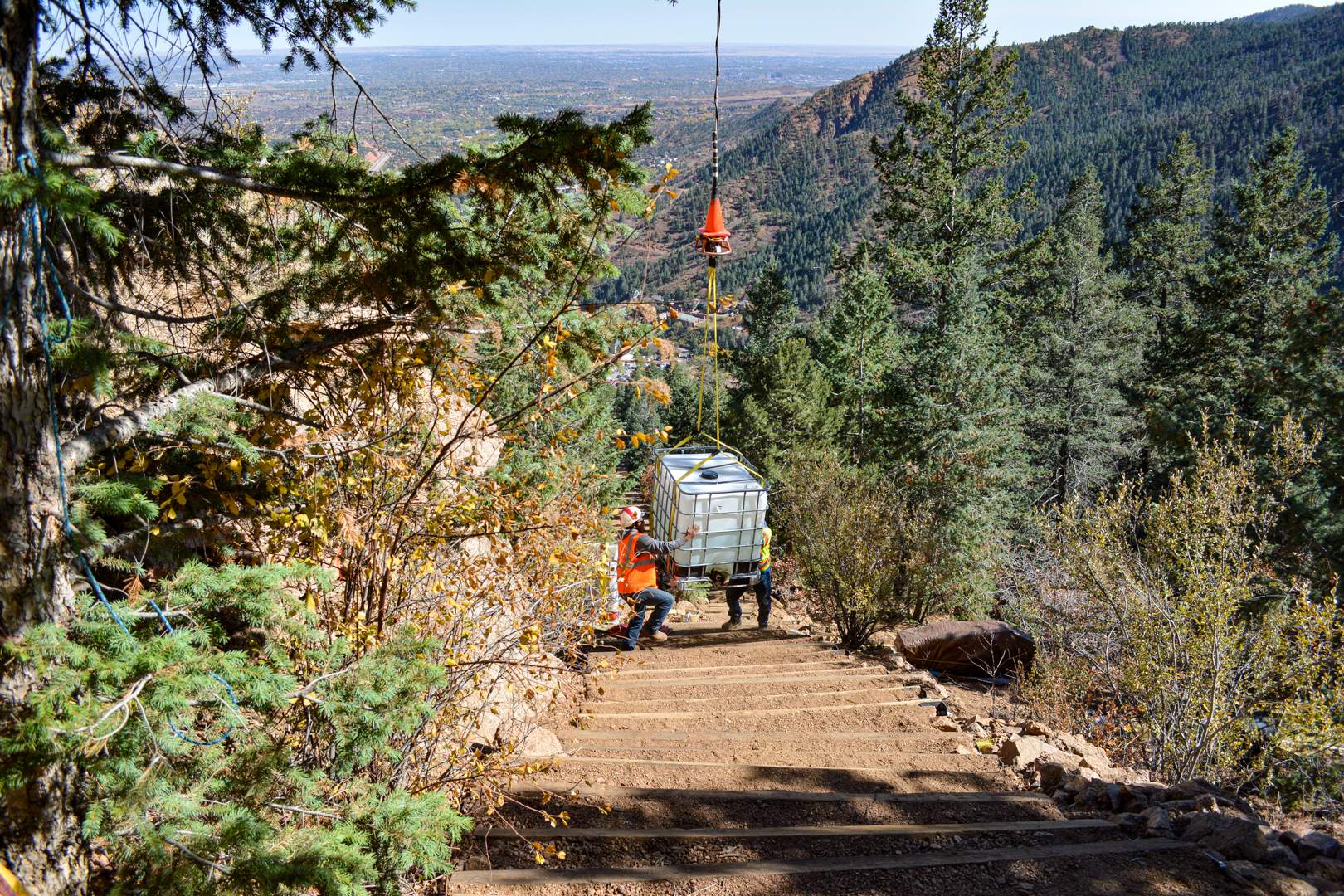
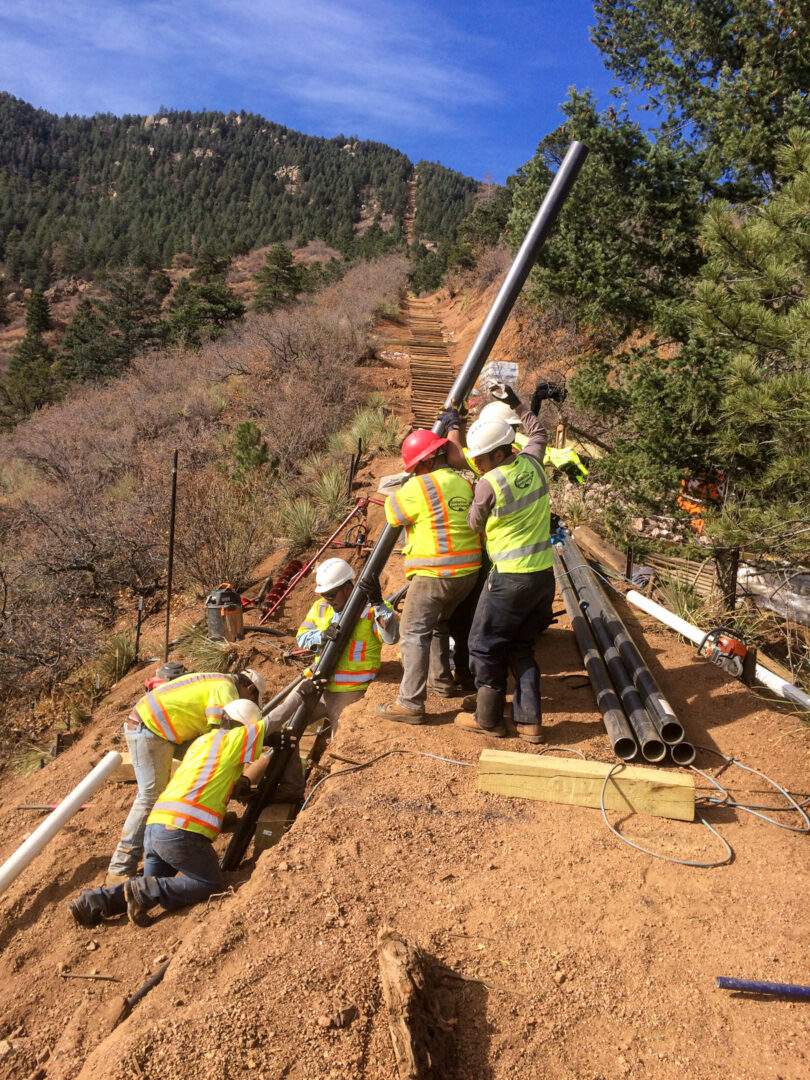
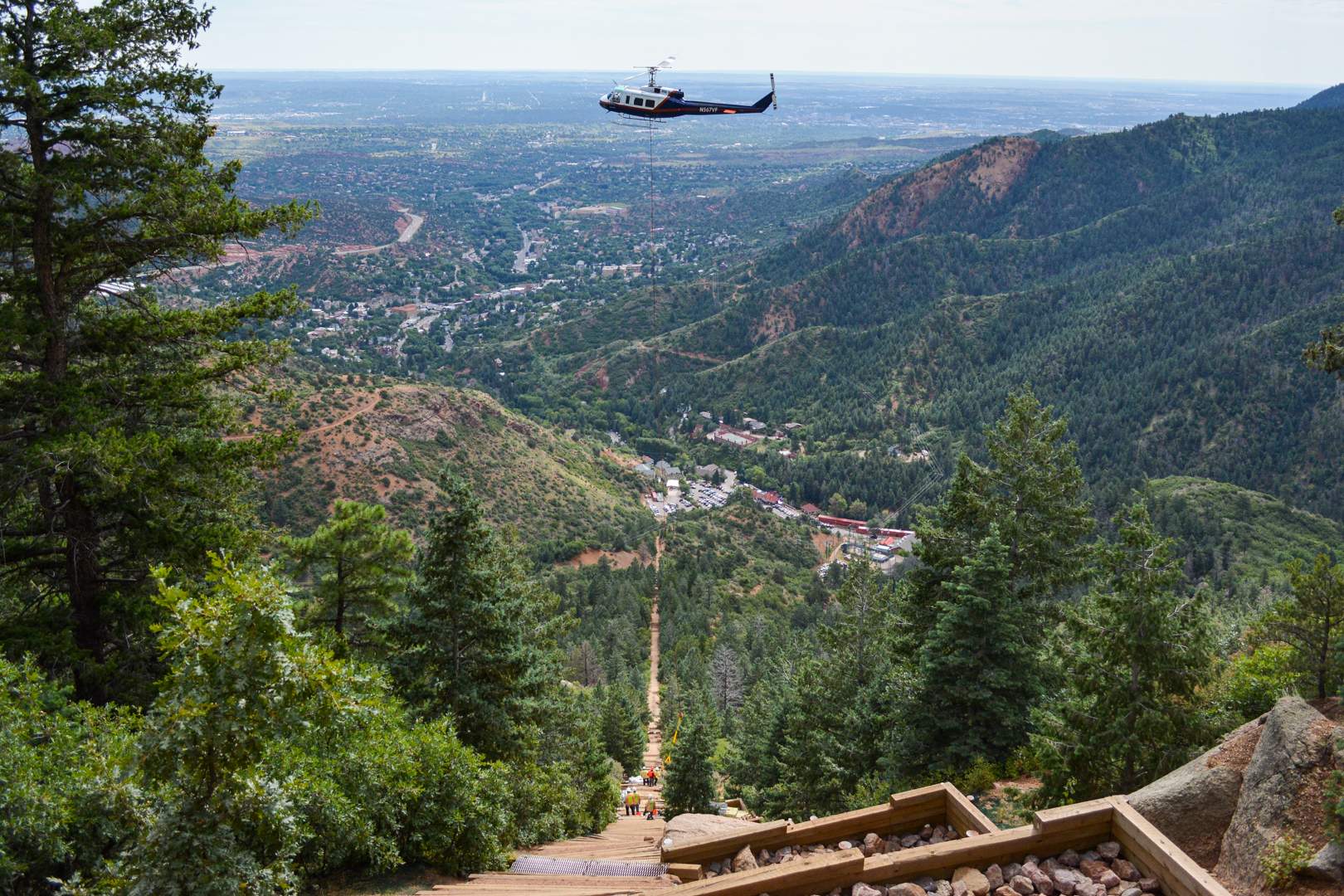
This phase also required highly coordinated logistics, including material transport up extreme grades using a combination of manual hauling and helicopter lifts.
By the time Phase III wrapped, the Incline had been significantly strengthened for long-term public use.
The Crew: Real Work on a Vertical Job Site
This project wasn’t your typical landscaping job—it was a mountain operation.
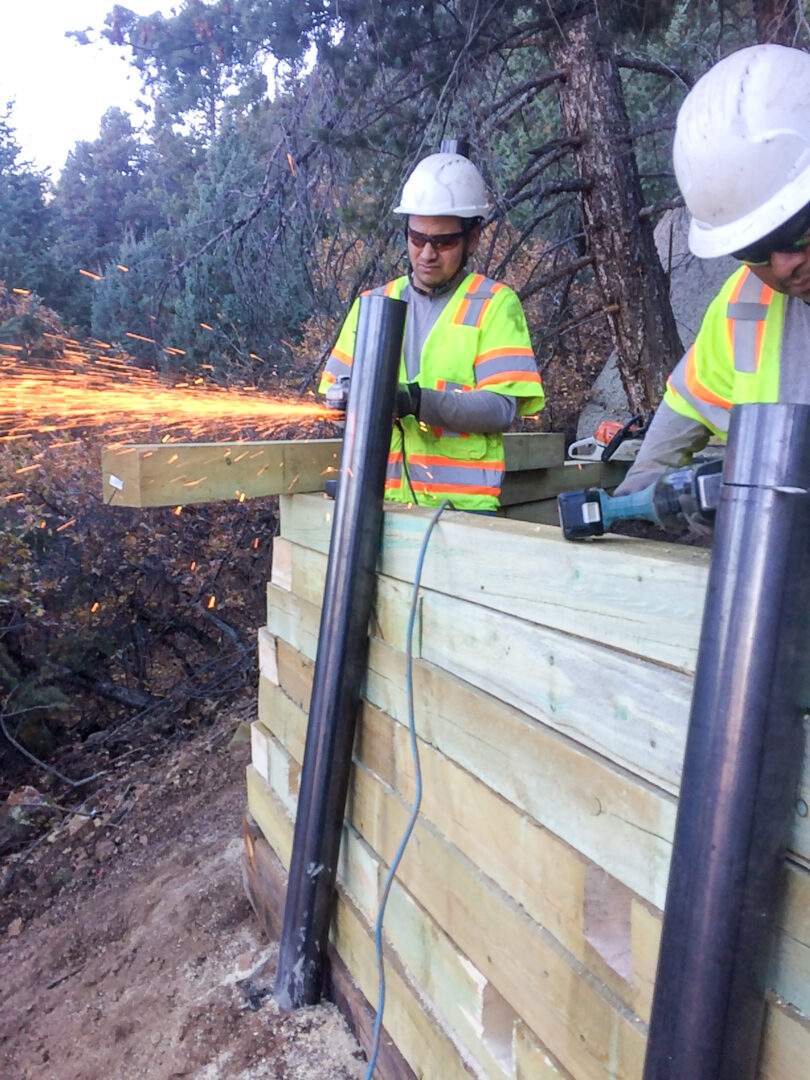
Crews worked in thin air, steep grades, and unpredictable weather, often carrying materials up the Incline by hand. Every step mattered. Every tie placement mattered.
It was physically demanding work, but also deeply meaningful for the team involved.
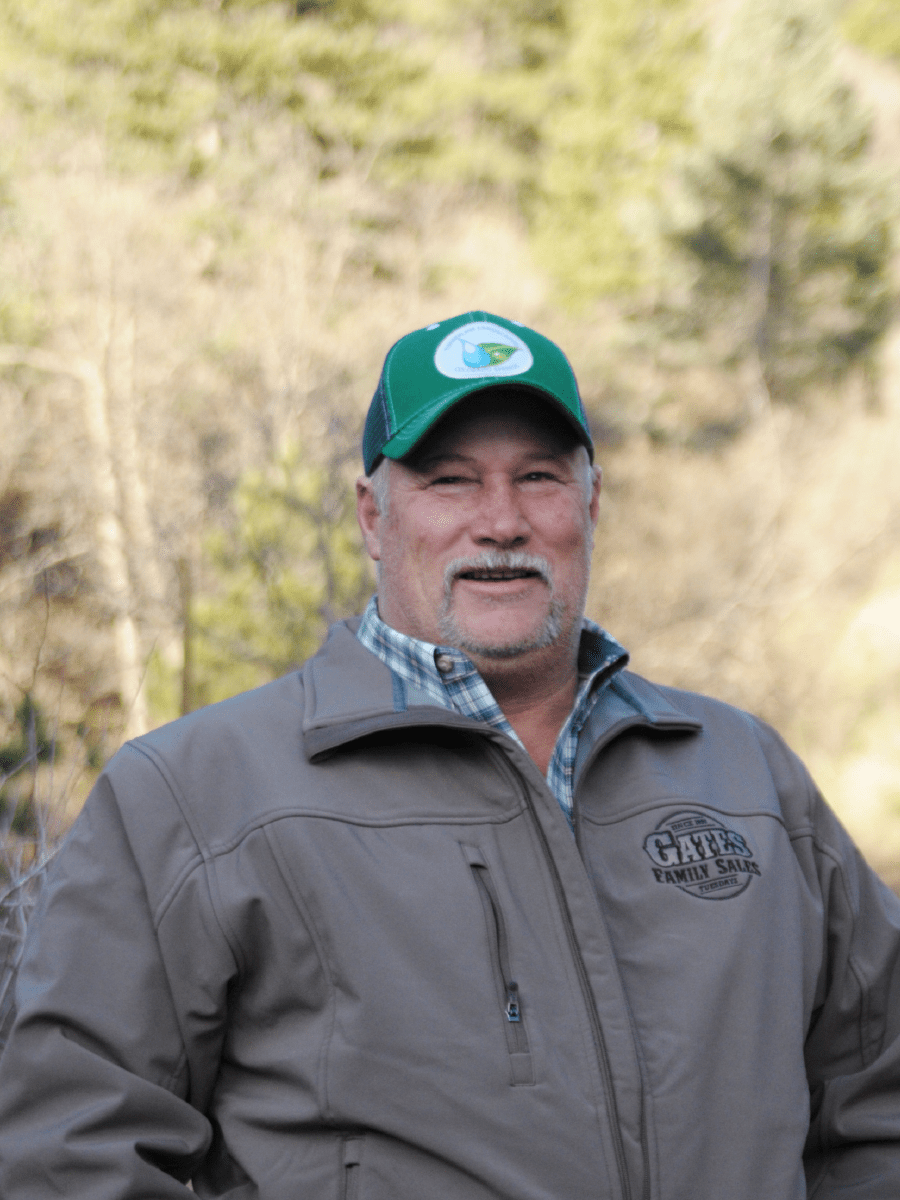
As Tim Emick, shared in a 2017 interview, the project stood apart from anything else the company had taken on:
The intensity of the work was also documented beyond the jobsite. In a 2017 AP News feature on the Manitou Incline restoration, both leadership and crew members described the project as unlike anything they had experienced before—highlighting the steep terrain, unpredictable conditions, and physically demanding nature of working on the Incline during reconstruction.
That perspective aligns closely with what the crew experienced firsthand on the mountain every day.
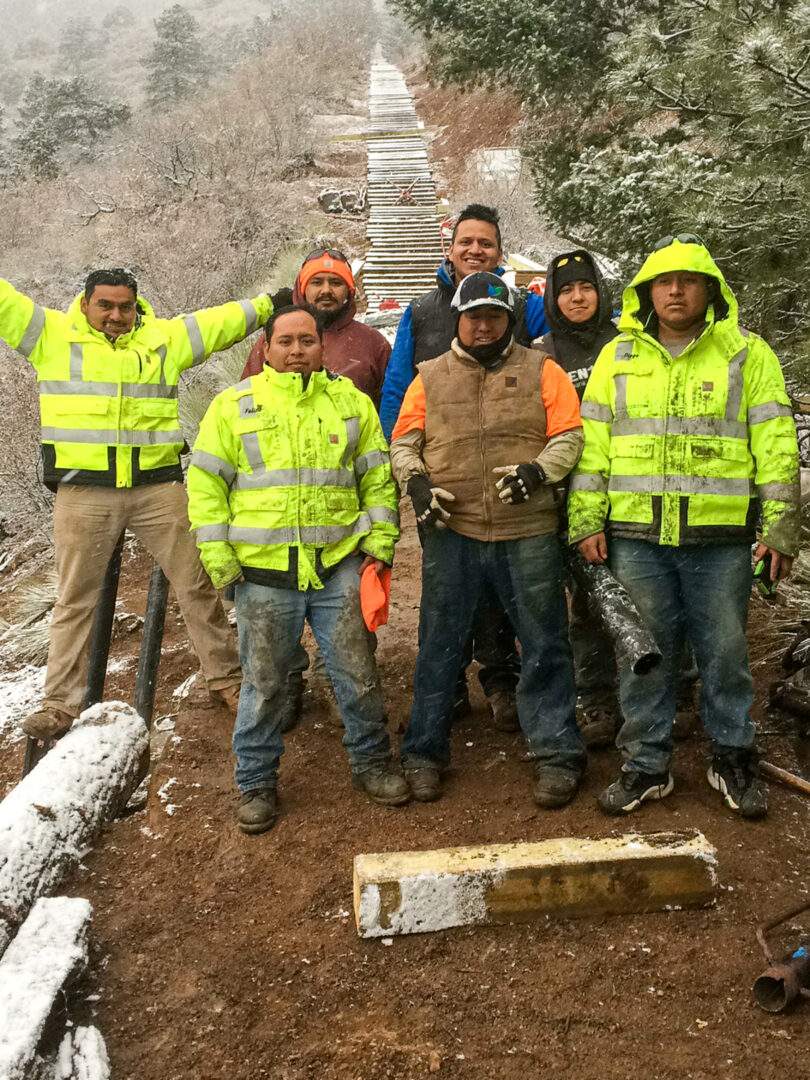
We asked Erik Mondragon (Project Manager), Hugo Benitez (Foreman / Helicopter Director), Diego Martinez, Omar Gonzalez, and Victor Bravo to share their experiences working on one of Colorado’s most iconic trails.
What does it mean to you to have worked on such a popular trail?
- Mondragon:
- “It meant a great deal to me, […]. The Incline is something that doesn’t come across as an opportunity to do work on, ever. I think we were very blessed to be able to do so.”
- Benitez:
- “It gives me two different sensations: blessed for the opportunity to be part of this project and give back to this beautiful city I call home. And pressure—because the media was watching closely. That’s something I only experienced on the Incline.”
- Martinez:
- “It means a lot to me, and it feels good to know that we are taken into account when we are working.”
- Gonzalez:
- “It is incredible to be part of this project, which has a lot of importance for the city.”
- Bravo:
- “It means a lot because it is something very popular in the city.”
What was the most difficult part of construction?
- Mondragon:
- “Coordination and timing—getting special materials on time, job safety, helicopter coordination, and overall safety.”
- Benitez:
- “Digging 15 feet into the ground, working on a 50 percent slope, and the overall difficulty of the job.”
- Martinez:
- “Nothing is difficult—while you’re there you want to do everything possible in your work.”
- Gonzalez:
- “For me, it was climbing the Incline the first week.”
- Bravo:
- “Nothing is difficult, because everything is easier with our companions and group leader.”
What challenges did the crew have to overcome?
- Mondragon:
- “It was a huge learning curve at first. This is not in our normal scope of work. We had to build new systems and get the right people in place to get the work done.”
- Benitez:
- “Preparing for helicopter operations—one small mistake can cause a lesson. Also building the boulder wall in Phase II, moving tons of rock and dirt by hand.”
- Gonzalez:
- “There were many challenges, but teamwork, communication, and organization made things easier.”
- Bravo:
- “The challenge was physical exhaustion, but it was overcome by passion for our work.”
Do you have any favorite stories or memories from working on the trail?
- Mondragon:
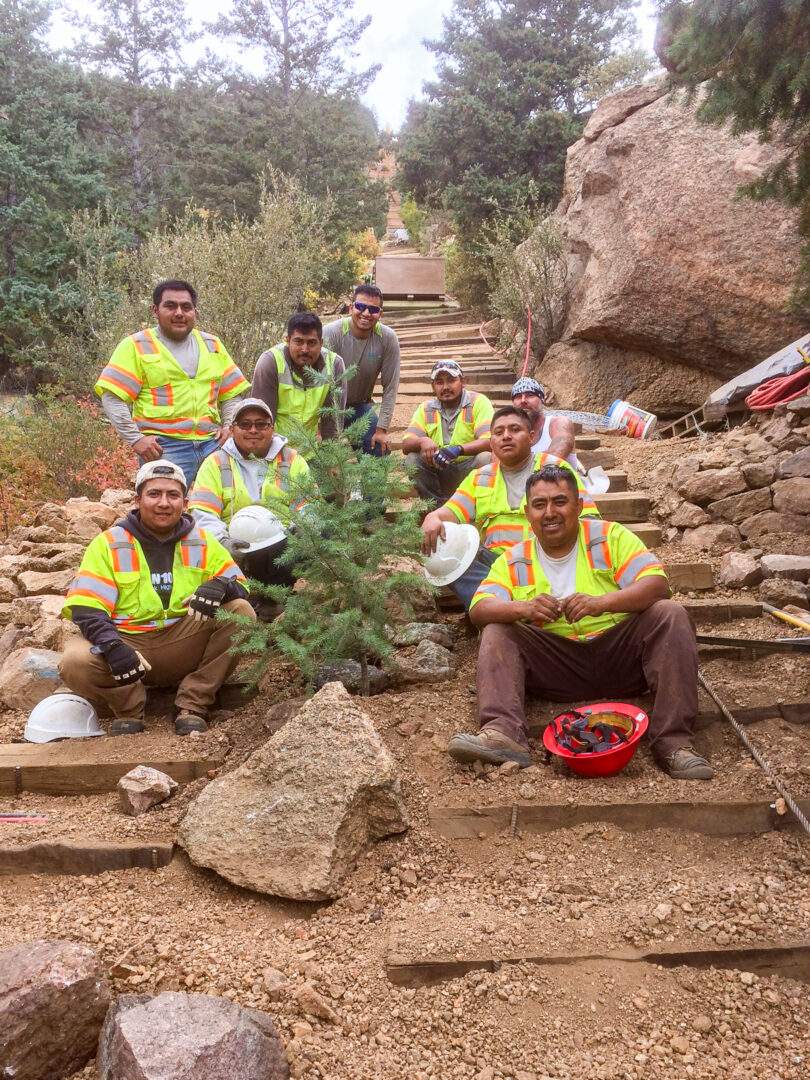
- “The thing that means the most isn’t a story. It’s the feeling of coming together as a team and accomplishing the same mission.”
- Benitez:
- “Two things: people thought we wouldn’t finish on time—and we did. And I felt pride for my family.”
- Martinez:
- “When the bears arrived and we had to step away so they could pass.”
A Crew, a Mountain, and a Shared Effort
When you put all of these stories together, a clear picture starts to form—not of a single project, but of a team learning, adapting, and pushing through one of the most demanding job sites in Colorado.
The Incline didn’t care about job titles, experience levels, or how prepared anyone felt on day one. It demanded coordination, patience, physical grit, and a willingness to figure things out as the terrain changed under their boots.
What stands out most isn’t just the technical work that was completed across Phases I, II, and III but the way the crew showed up for it. From helicopter coordination to hand-built retaining systems to long climbs carrying materials up the mountain daily, every part of the job required trust in each other and pride in the work being done.
Years later, what remains isn’t just a restored trail system—it’s the shared experience of a crew that met a rare kind of challenge together and left it better than they found it.
Good Read? Share With A Friend!
Other Helpful PostS
When it comes to commercial landscape maintenance, few properties carry the visibility, complexity, and significance of the U.S. Olympic & Paralympic Training Center…
To say that The Manitou Incline Renovation was a large undertaking would be both obvious…and an understatement. Before placing our name in the hat for the project we asked ourselves…
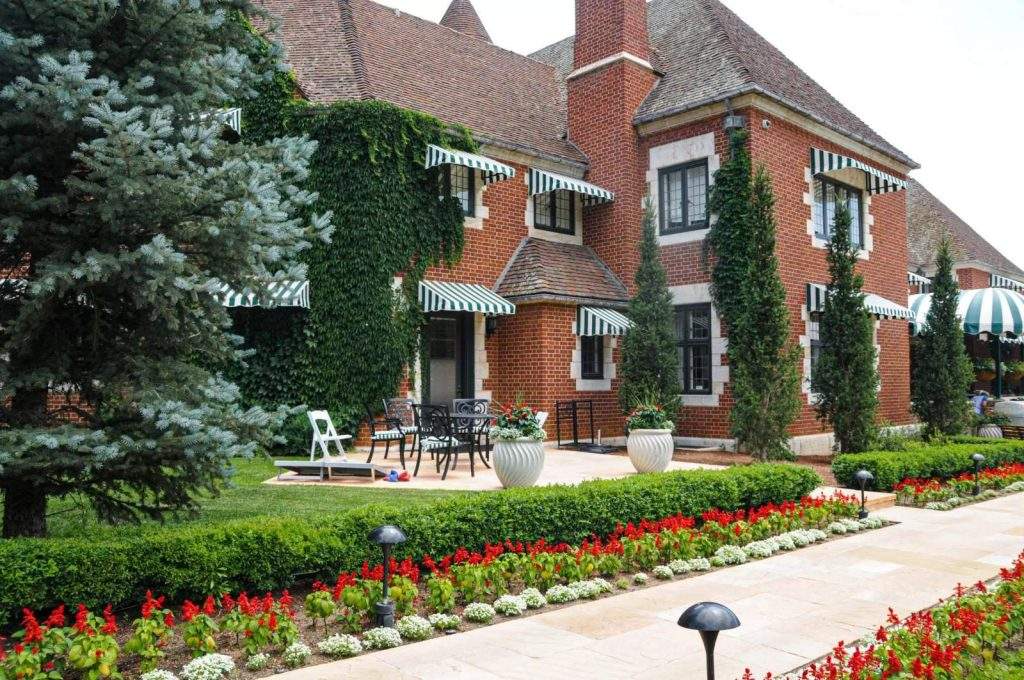
When The Broadmoor proposed transforming their beautiful 12,000 square-foot estate house into a space for events, weddings, or families to stay for a weekend, they…