The invasive Emerald Ash Borer continues its relentless spread through Colorado, presenting a growing threat to our state’s diverse ecosystems. With its presence now confirmed near Colorado Springs, the introduction of this destructive pest remains a significant concern. Understanding the threat posed by the EAB and taking appropriate action is essential to safeguarding our ash tree populations across the state.
Table of Contents
TL;DR: Can ash trees in Colorado be saved from the Emerald Ash Borer?
Answer:
What Is The Emerald Ash Borer?
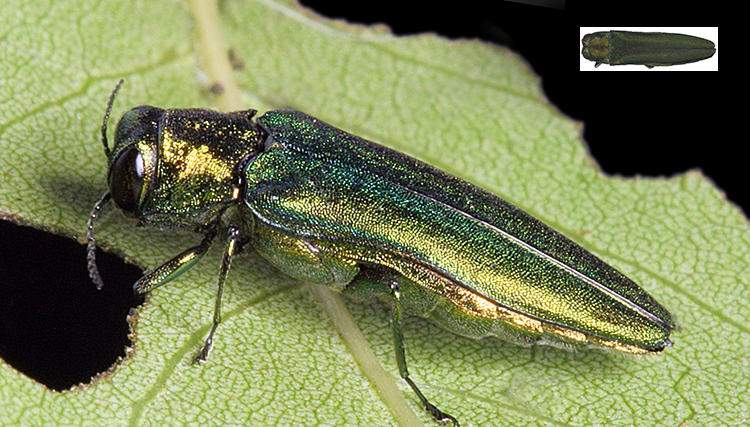
The Emerald Ash Borer (EAB) is a small but formidable insect native to Asia. Belonging to the beetle family, it measures only about half an inch in length.
The EAB first made its unwelcome debut in North America in 2002, likely hitching a ride on wood packing materials. Since then, it has spread like wildfire, wreaking havoc on ash tree populations across the continent. This distinctive metallic-green beetle may be small in size, but its impact is nothing short of devastating.
This invasive pest targets only ash trees as its host and with no natural predators to keep its population in check, the EAB has become one of the most destructive tree insect pests in history.
Where In Colorado Is The Emerald Ash Borer?
First detected in Boulder in 2013, the EAB has now been detected in the following Colorado cities.
- Arapahoe County (2023)
- Arvada (2020)
- Boulder (2013)
- Broomfield (2019)
- Carbondale (2023)
- Erie (2021)
- Fort Collins (2020)
- Gunbarrell (2013)
- Lafayette (2017)
- Littleton (2023)
- Longmont (2016)
- Louisville (2020)
- Lyons (2018)
- Superior (2018)
- Thornton (2022)
- Unincorporated Larimer County (2019)
- Westminster (2019)
For more information on where in Colorado the EAB has been detected, visit the Colorado State Univeristy’s interactive map.
Invasive Emerald Ash Borer and The Toll on Ash Trees
Ash trees, known for their majestic beauty and ecological significance comprise about 15% of the urban forest in Colorado.
Adult EABs lay their eggs under the bark. Once hatched, the larvae burrow beneath the bark, feeding on the part of the tree that transports water and sugars throughout the trunk and branches. This feeding activity deprives the tree of nutrients, ultimately leading to its decline and eventual death.
Spotting the Signs Of Infestation
Identifying signs of Emerald Ash Borer infestation is crucial for early detection and to slow the spread to other trees. Keep a watchful eye on your ash trees for telltale signs of infestation, including:
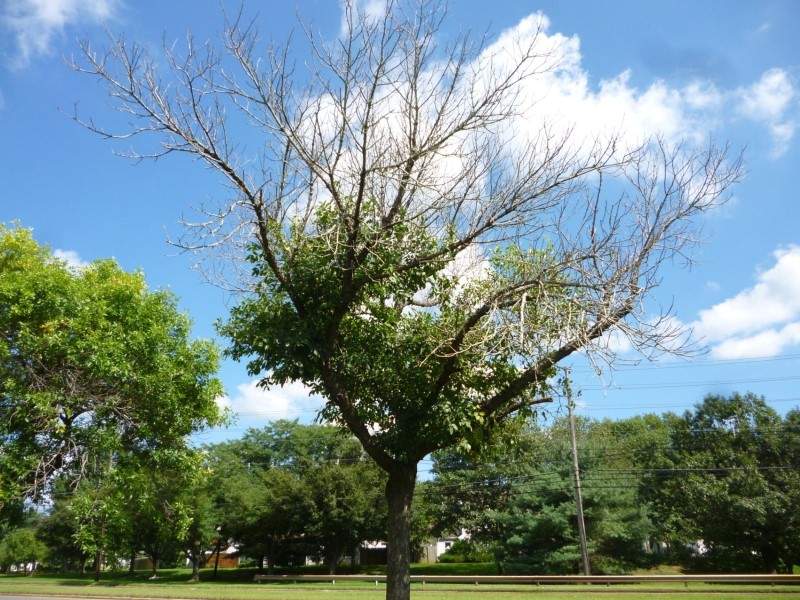
Thinning canopy
Premature yellowing of and decreased foliage density, particularly in the upper portions of the tree.
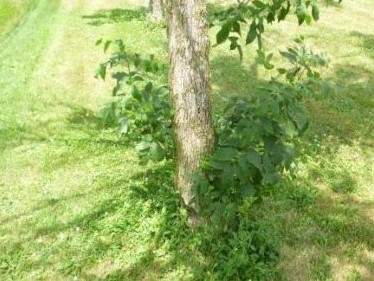
Epicormic sprouting
Growth of small shoots along the trunk is a stress response caused by larval feeding.
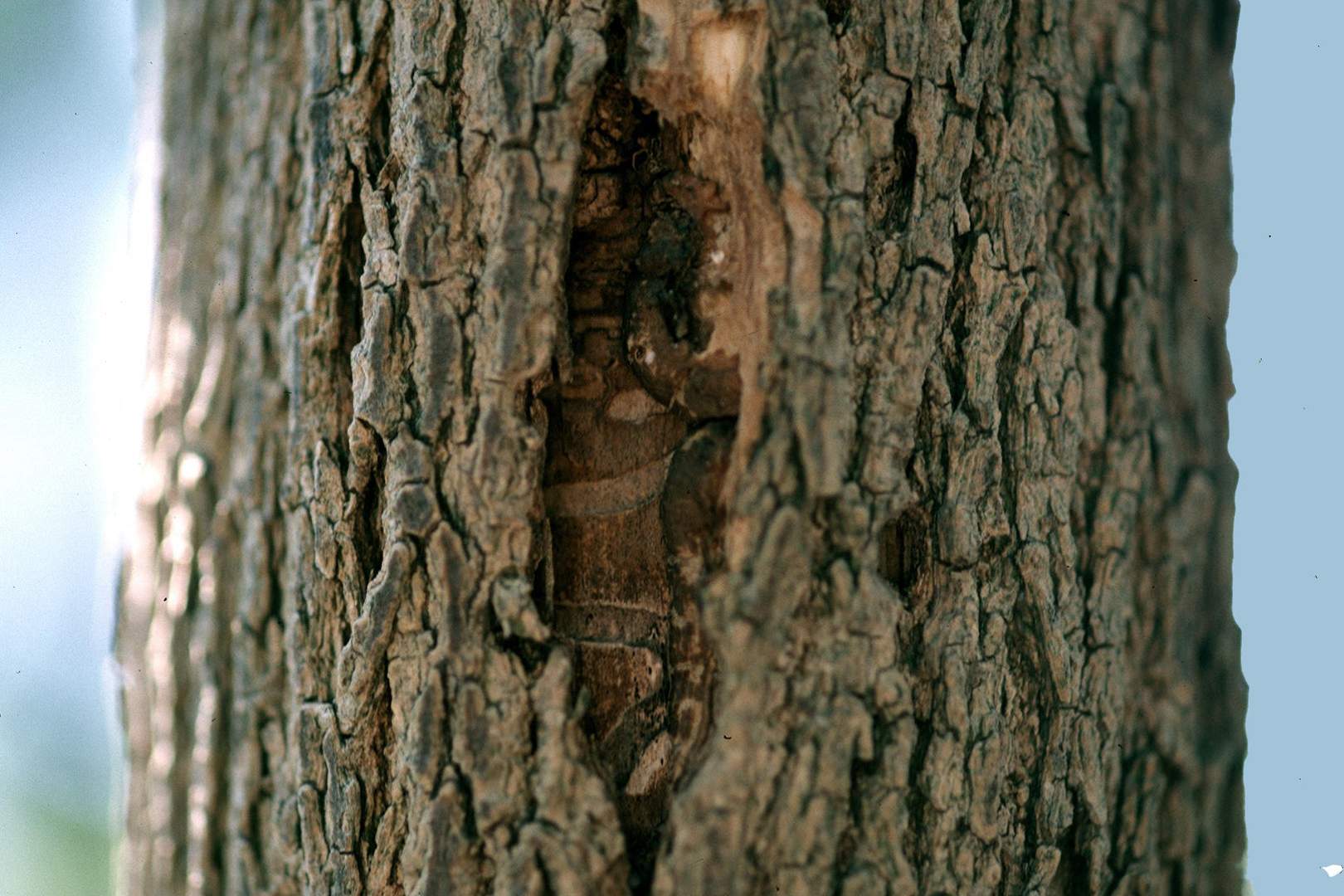
Vertical Splits In Bark
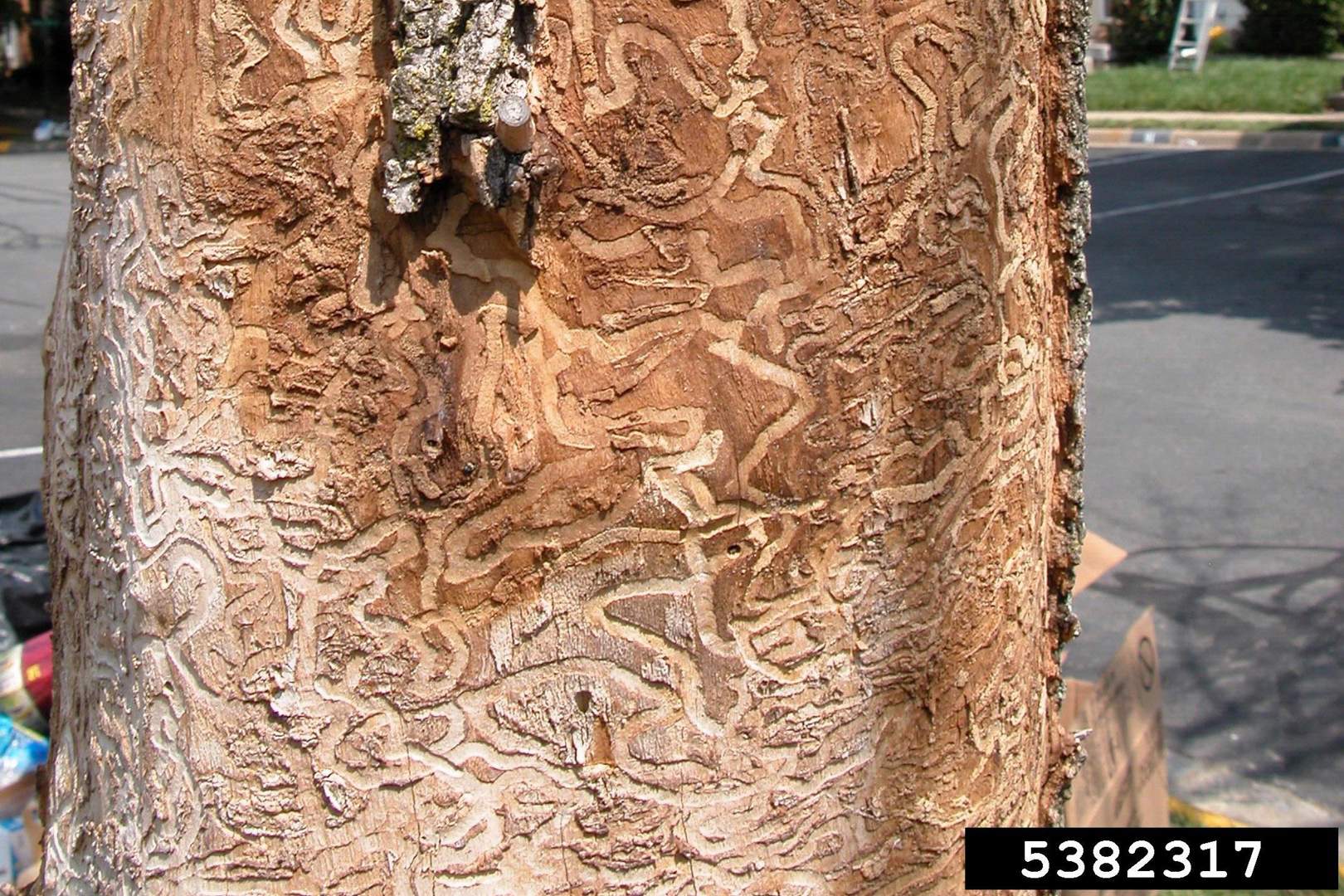
Longitudinal cracks or fissures in the bark, revealing S-shaped larval galleries.
S-Shaped Larval Galleries
S-shaped larval galleries as the larvae burrow beneath the bark, feeding on the part of the tree that transports water and sugars throughout the trunk and branches.
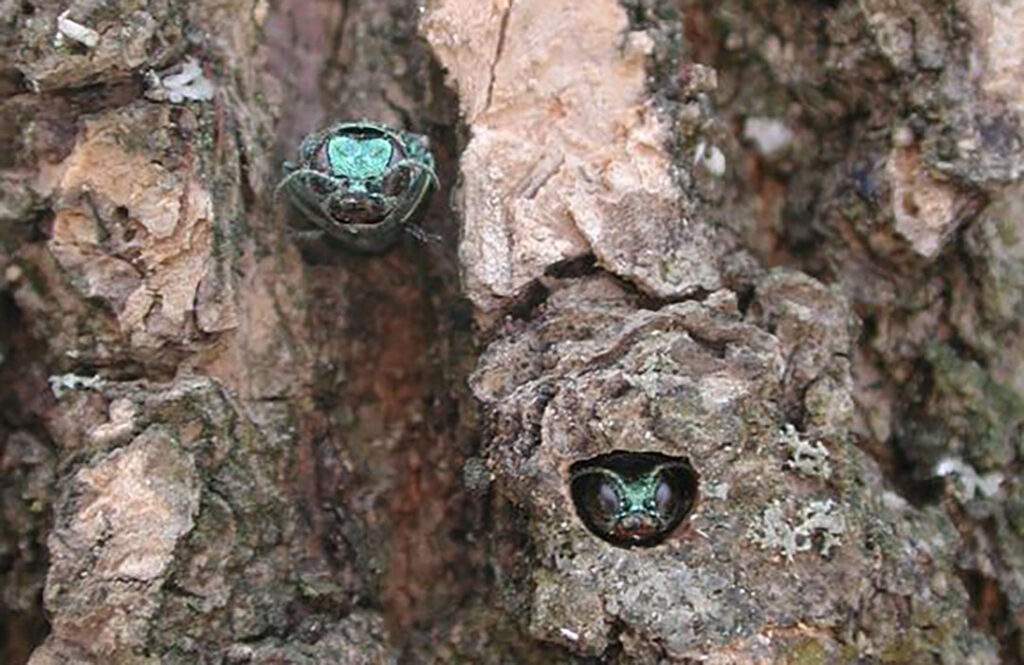
D-Shaped Exit Holes
D-shaped exit holes left behind by emerging adult beetles on the bark surface
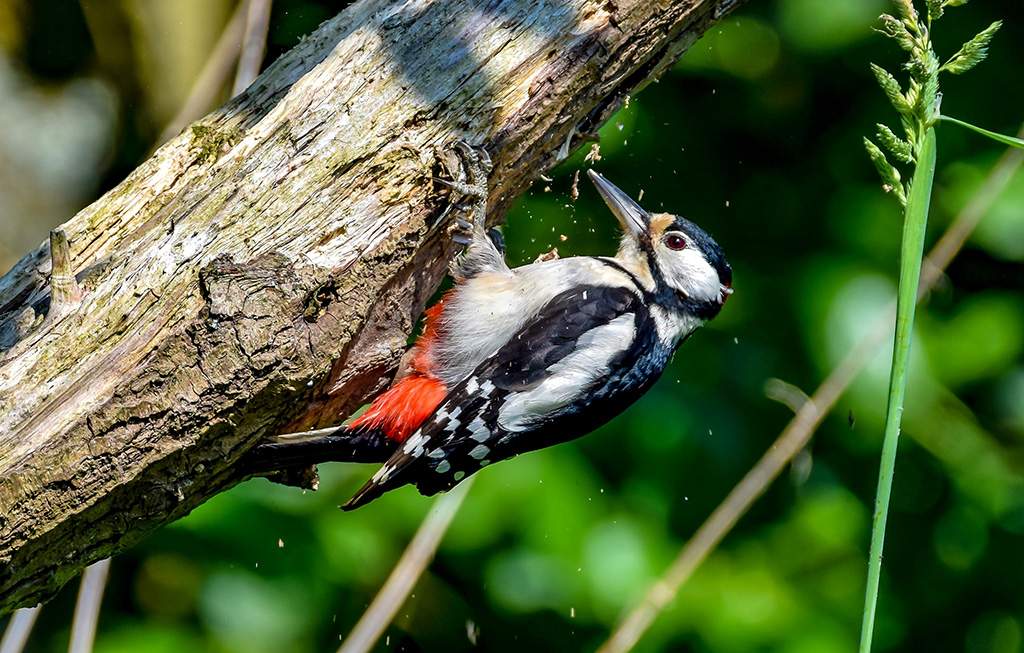
Woodpeckers
While not a significant threat, Woodpeckers like to feed on the larvae. An increase in Woodpecker damage on ash trees may be a sign of an infestation.
It is important to note that by the time external signs of infestation are observed, the tree is beyond the point of saving and action must be taken quickly to stop the spread to near trees.
Take Action!
If you suspect that your ash trees are infested with the Emerald Ash Borer, it’s essential to take action promptly. Here’s what you can do:
- Consult a Professional: Seek guidance from certified arborists who can assess the health of your trees and recommend appropriate measures.
- Treatment Options: Preventative Insecticide Injection place emamectin benzoate or imidacloprid into the tree’s vascular system to provide protection from invading borers. These injections must be applied annually by certified arborists to maintain effectiveness.
- Safe Removal: If infestation is confirmed, infected trees must be safely removed to prevent the spread of EAB to neighboring trees. However, caution is advised, as infected trees become brittle and pose additional risk during removal.
- Firewood: Avoid moving firewood to new areas. Buy kiln-dried firewood from local sources as much as possible.
Do I have An Ash Tree?
Take the first step to understand whether you have an ash tree in the first place. You can identify them by their leaves and fairly distinctive bark.
Timing is crucial in our efforts to combat the threat posed by Emerald Ash Borers. While preventative injections are a key defense for protecting ash trees, early detection and swift action are equally essential.
Reach out to our certified arborist at Front Range Arborist today for expert assistance in safeguarding our trees and preserving the beauty of our community.
Good Read? Share With A Friend!
Other Helpful PostS
Hear from our arboriculture experts on common insects that can be harmful to your trees and ways to mitigate some of their effects.
You’ve gone to the trouble of planting an edible garden – but there’s a small problem. So small that you can’t always see it. They’re gnawing…
When it comes to tree diagnosis, there are a wide variety of issues and diseases that can keep your tree from thriving; insects, fungal…