
There are homes that look beautiful during the day.
Then there are homes that completely transform after sunset.
Tucked beneath the towering pines and rolling hills of northern Colorado Springs, Star Ranch is a luxury mountain estate where outdoor lighting became more than illumination. It became emotion. Atmosphere. Art. Experience.
What began as an old halogen system became a nationally featured luxury outdoor lighting project. It now turns ponds into mirrors, trees into sculptures, and pathways into glowing journeys.
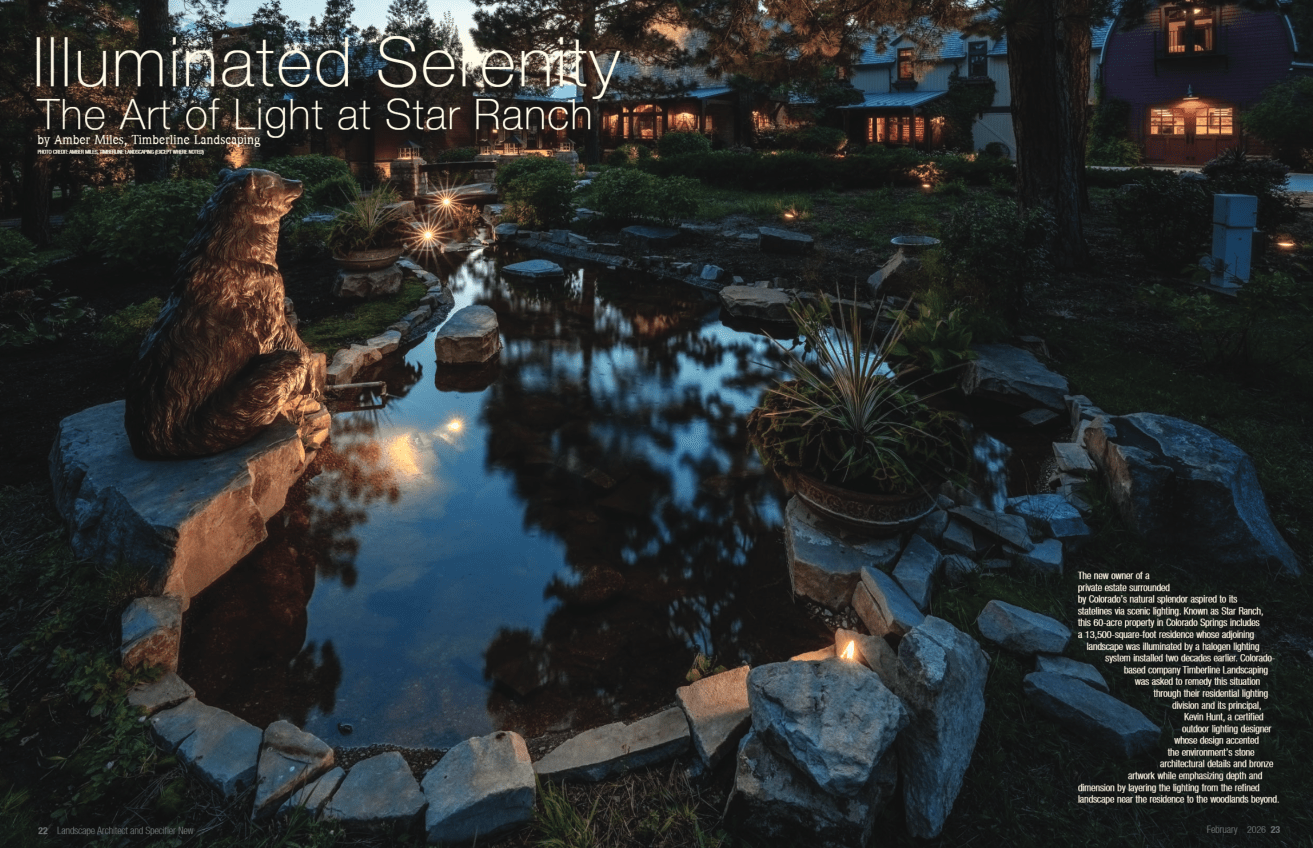
Landscape Architect and Specifier News magazine even featured the project, showing how smart outdoor lighting can change how a property feels at night. This project was not about adding more light. It’s about revealing the beauty that was already there.
Table of Contents
TL;DR: What is luxury outdoor lighting?
Answer:
A Colorado Springs Estate Designed to Be Experienced After Dark
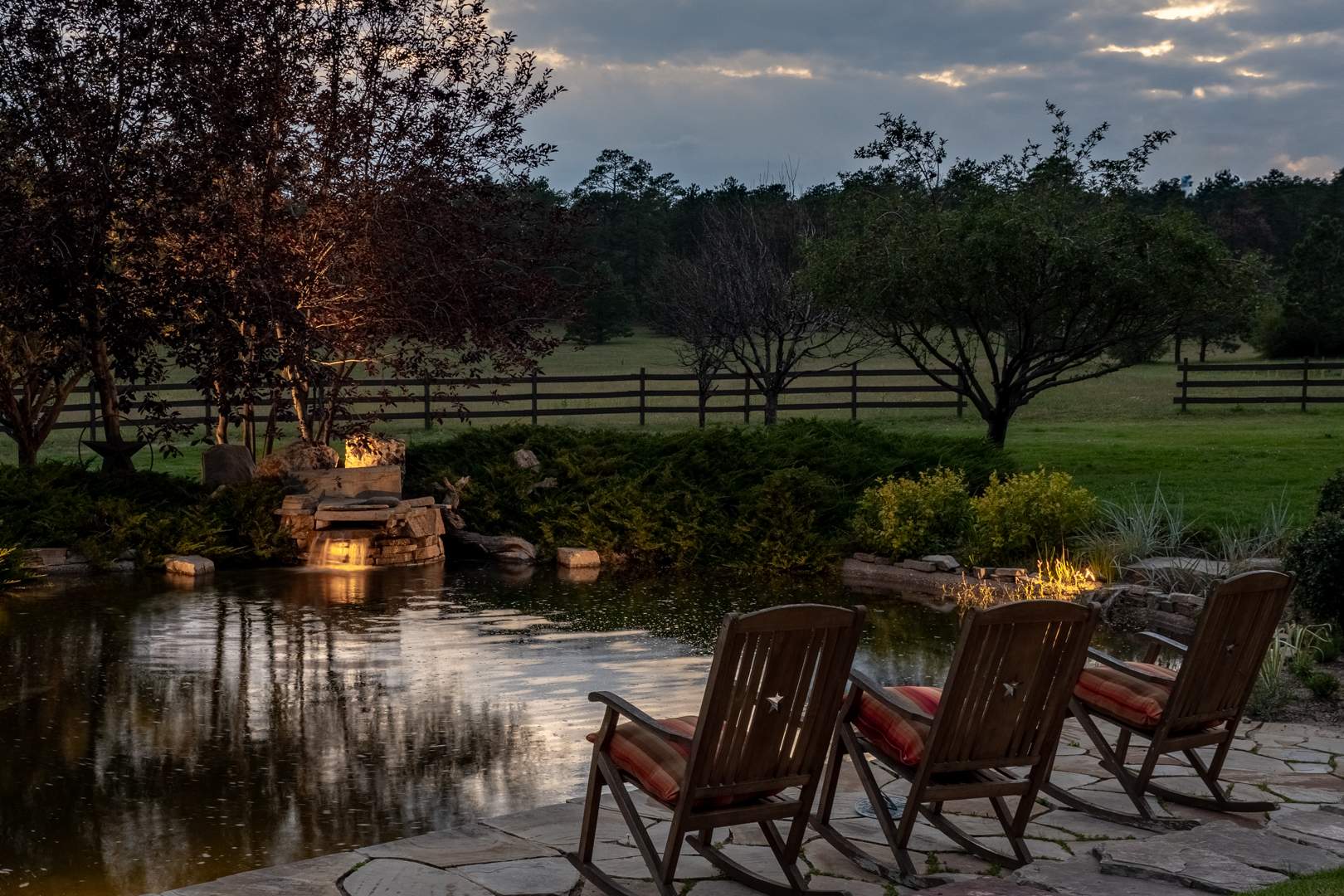
Set on 60 acres below Pikes Peak, the 13,500-square-foot estate combines stone architecture with evergreen forests. It also includes water features, sculptures, and outdoor spaces creating an immersive mountain retreat.
The homeowner envisioned a property that felt peaceful, warm, and alive after sunset. Rather than overwhelming the landscape with brightness, the vision was to create a natural, elegant glow that felt perfectly at home among the pines, stonework, water features, and gardens.
Every lighting decision was made to enhance the property’s beauty with subtlety and intention, revealing depth, texture, and character throughout the estate.
That meant designing a system that could:
Highlight Architectural Details
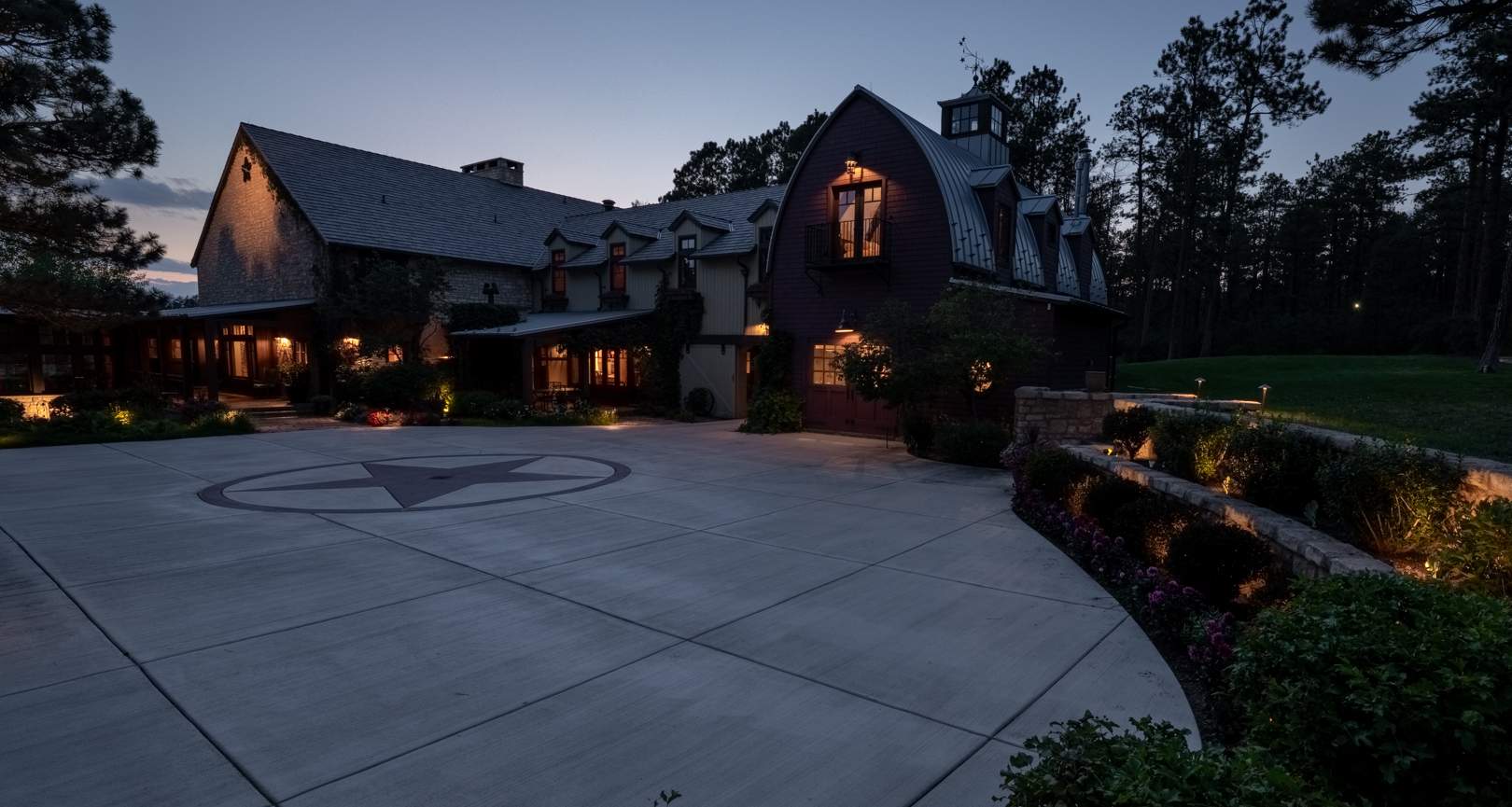
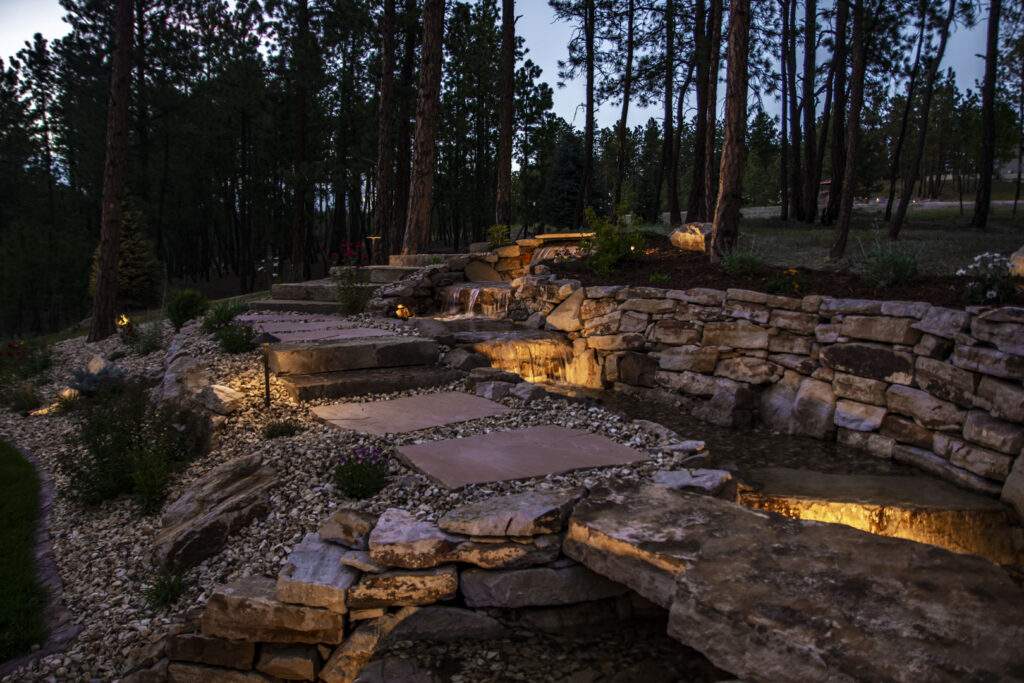
Warm lighting highlighted the home’s natural stone façade, entryways, patios, retaining walls, and terraces. It enhanced these features without overpowering the surrounding landscape.
Illuminate Water Features
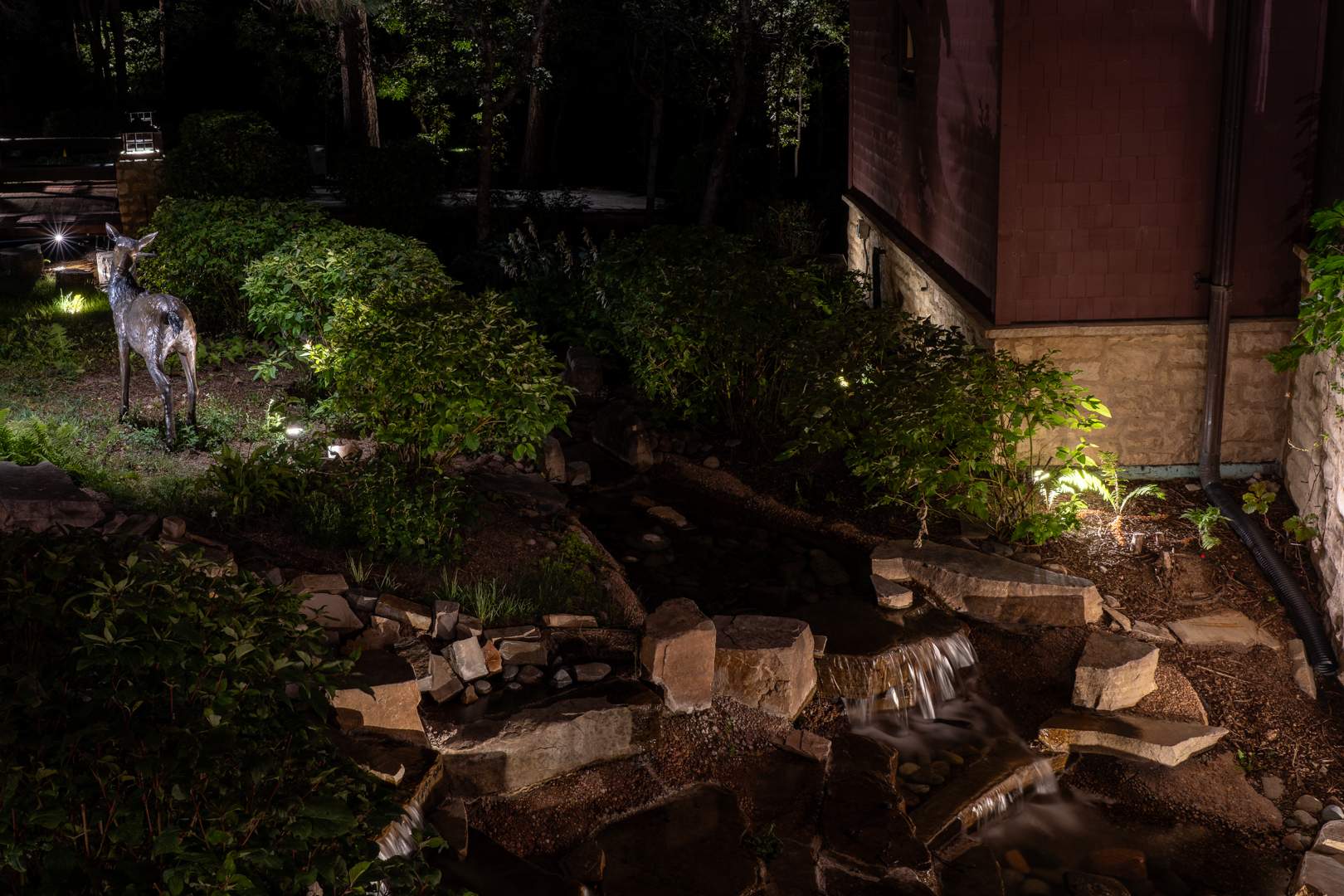
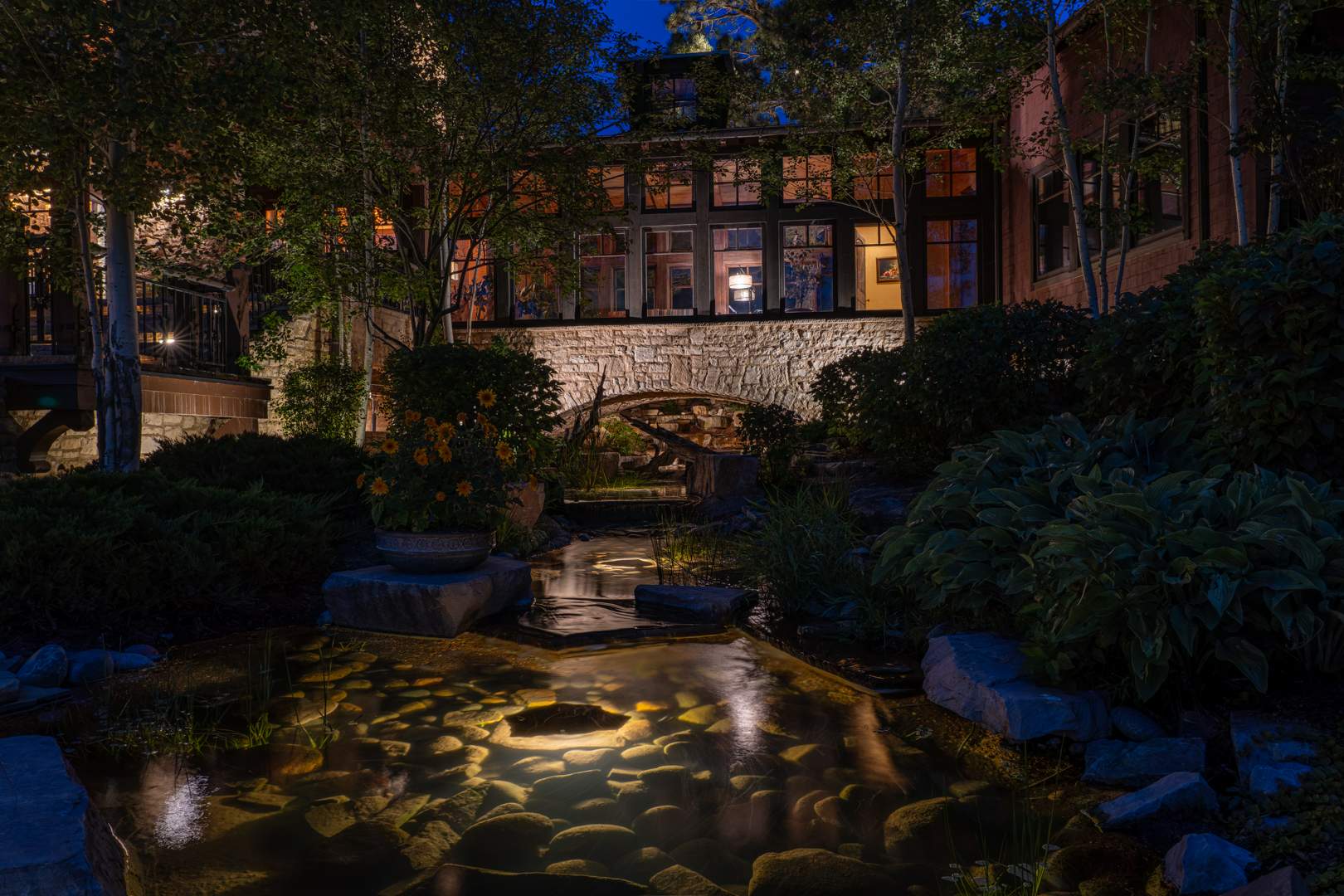
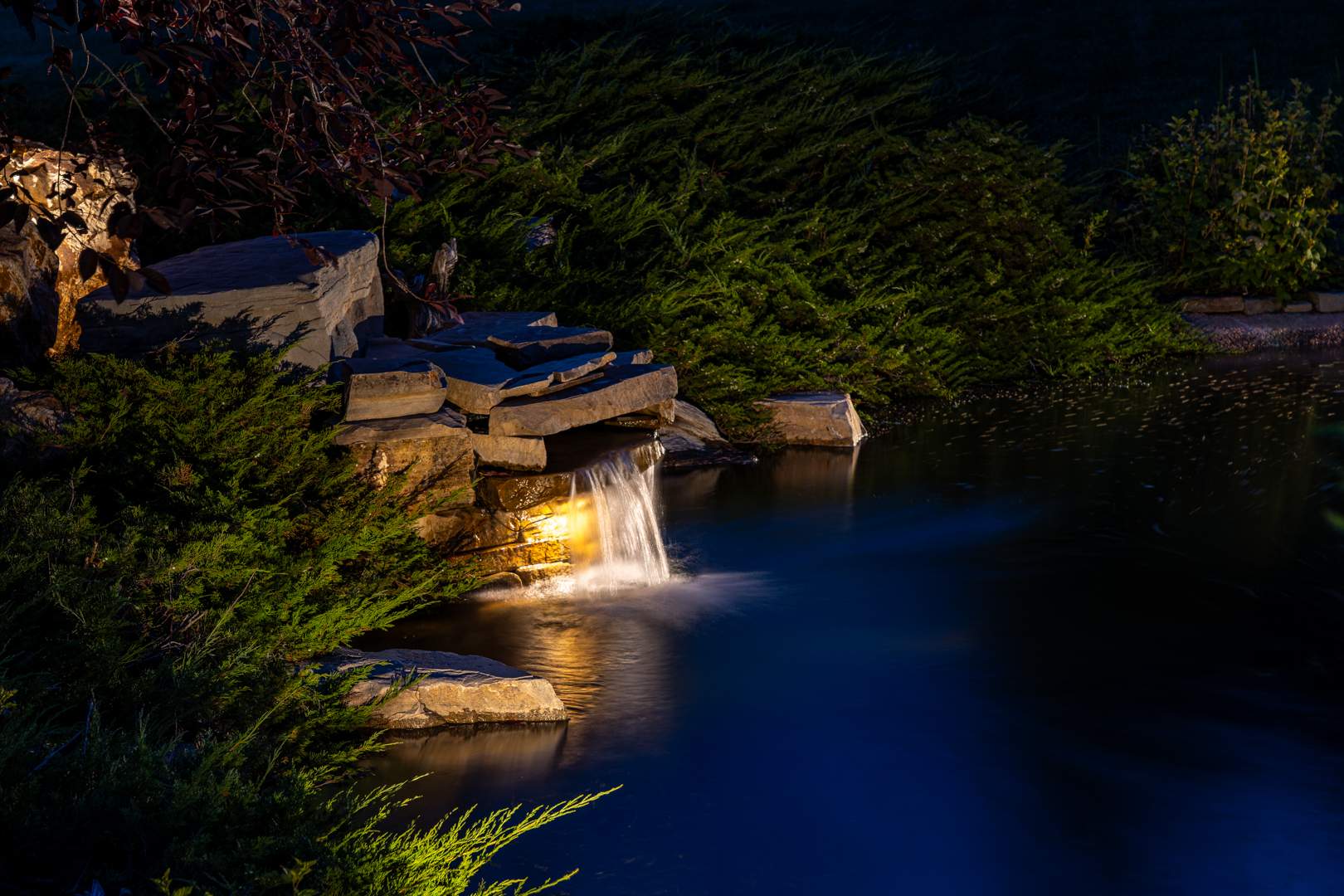
Submersible and spot lighting beneath streams, ponds, and waterfalls created movement, reflection, and depth throughout the property.
Create Natural Moonlight Effects
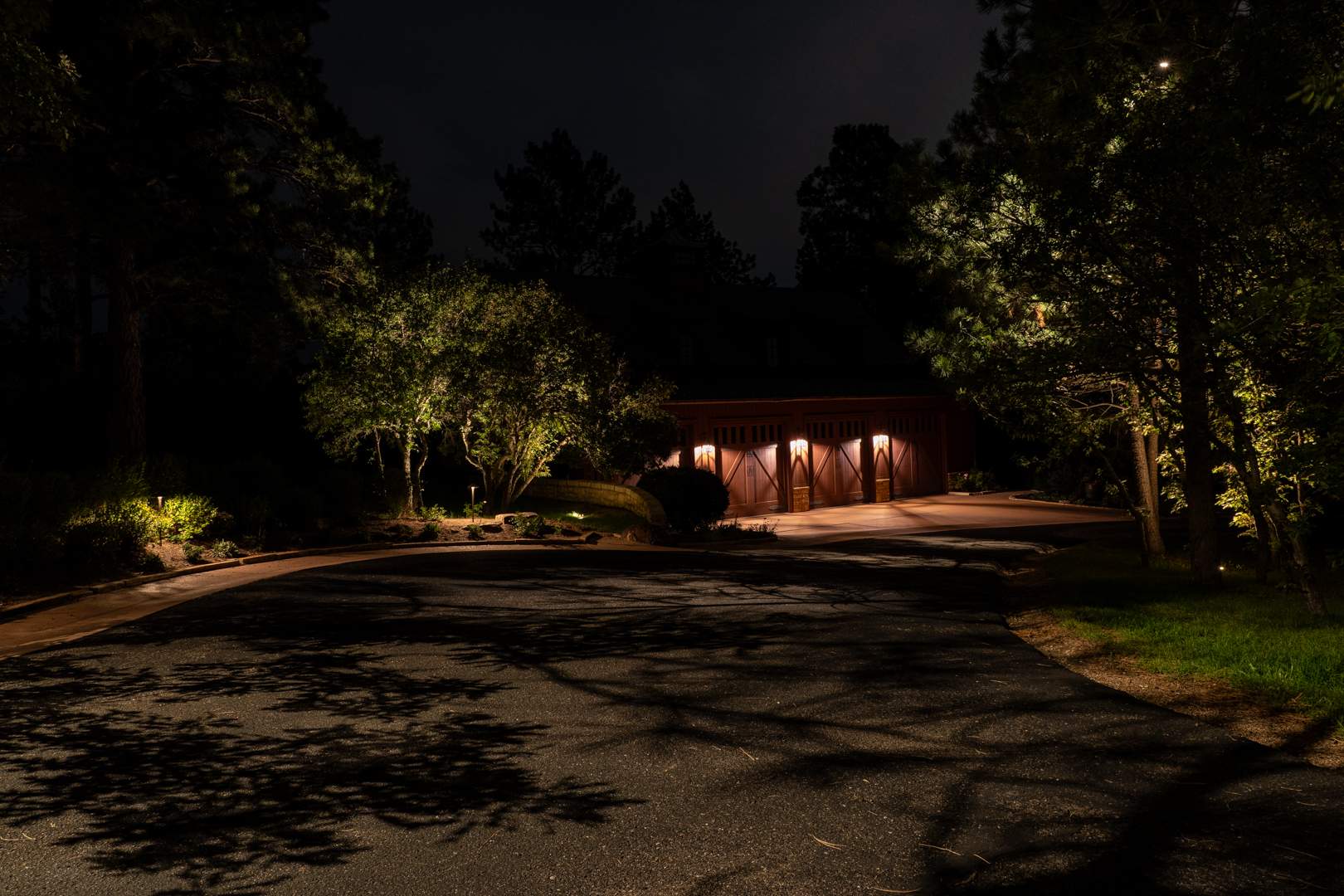
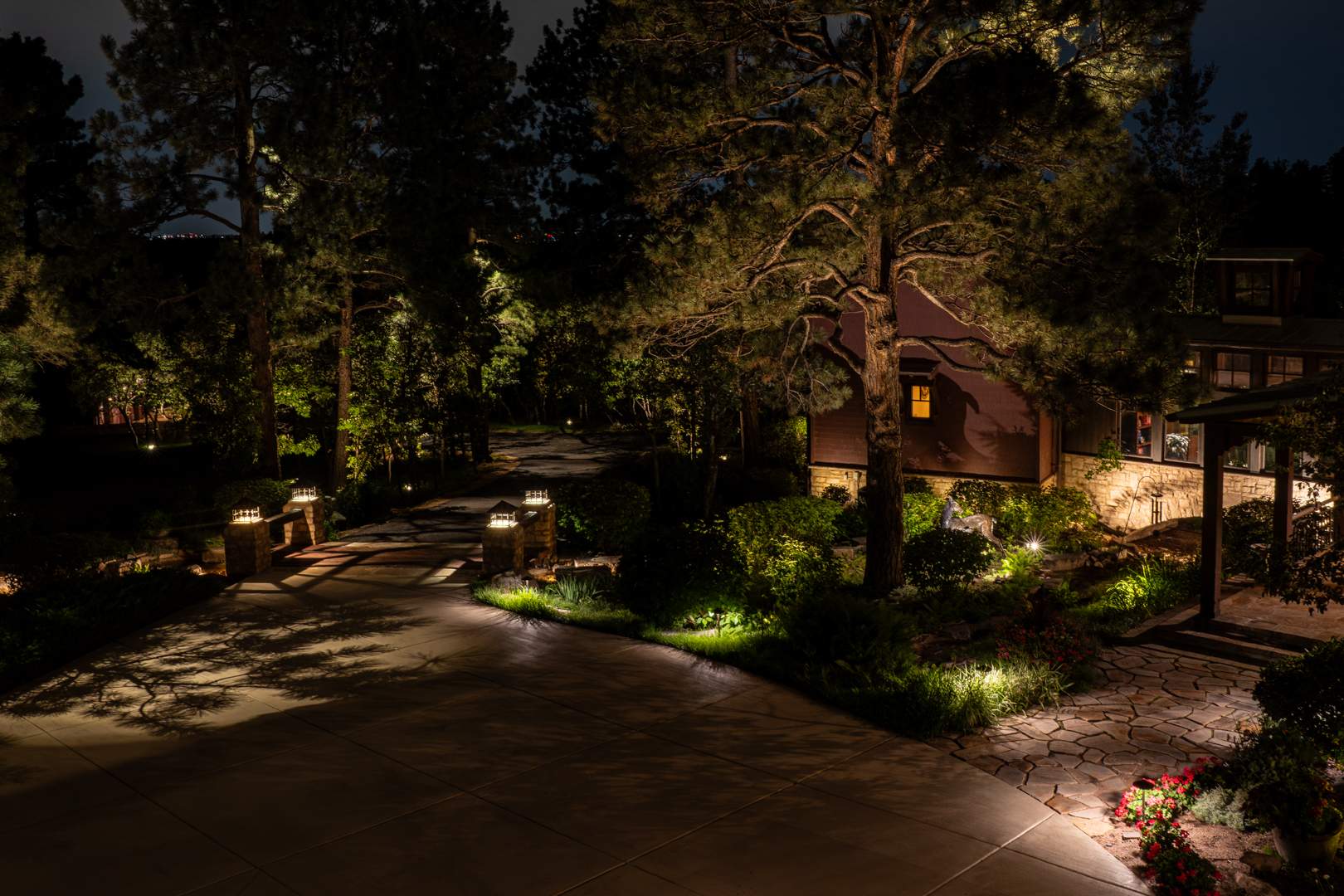
Tree-mounted downlights cast soft light on pathways, courtyards, and gardens. They mimic moonlight filtering through the pine trees.
Showcase Sculptures and Art
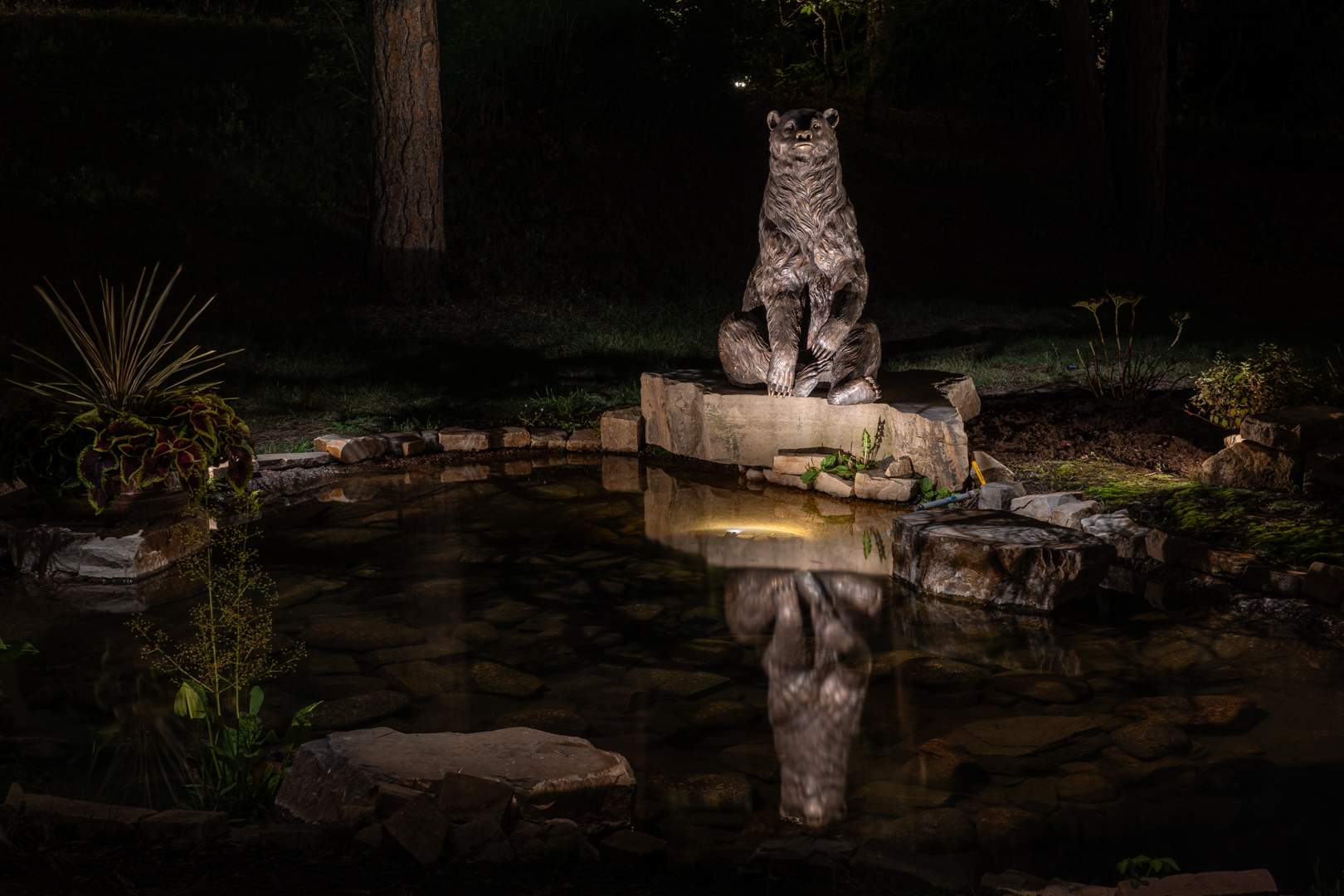
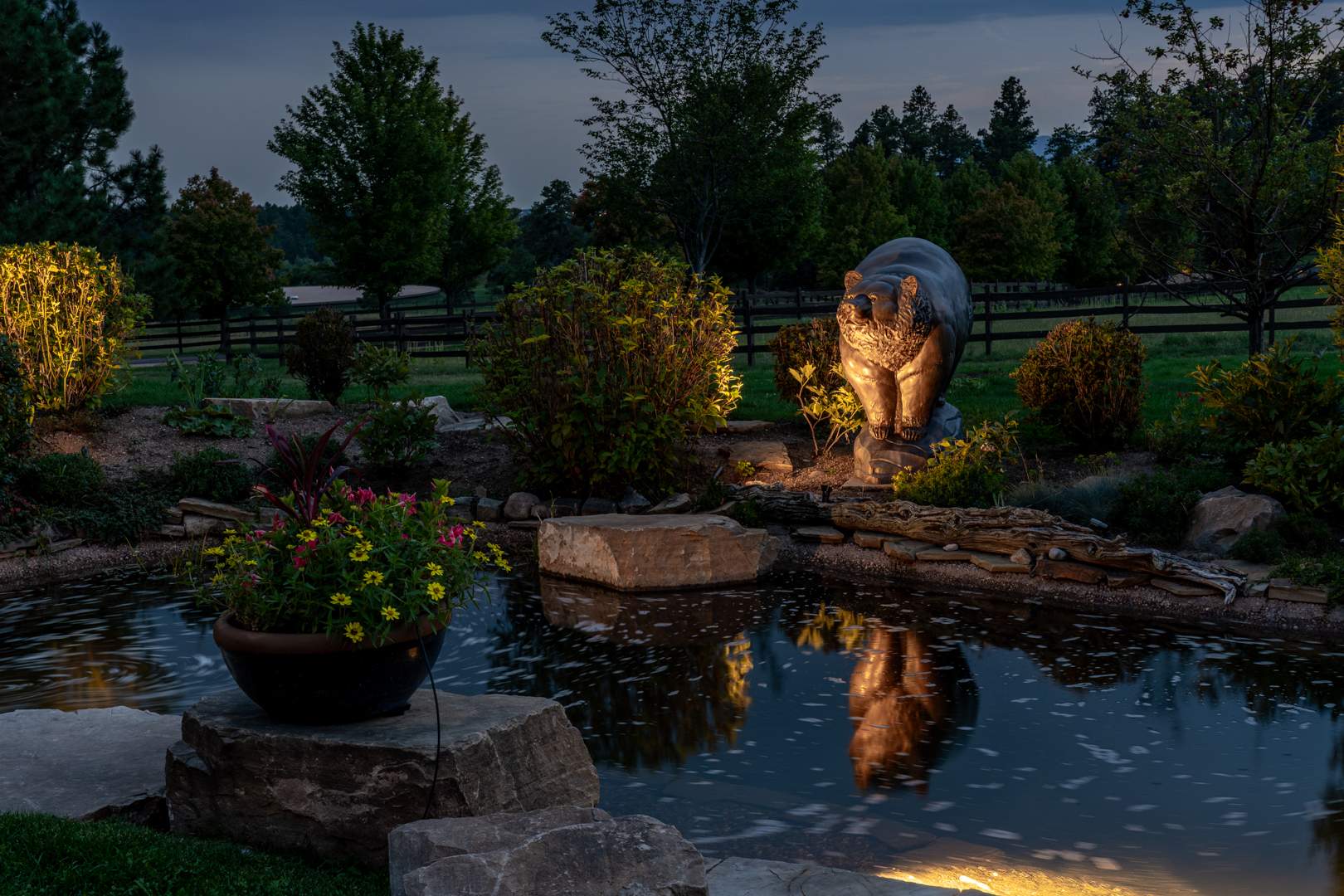
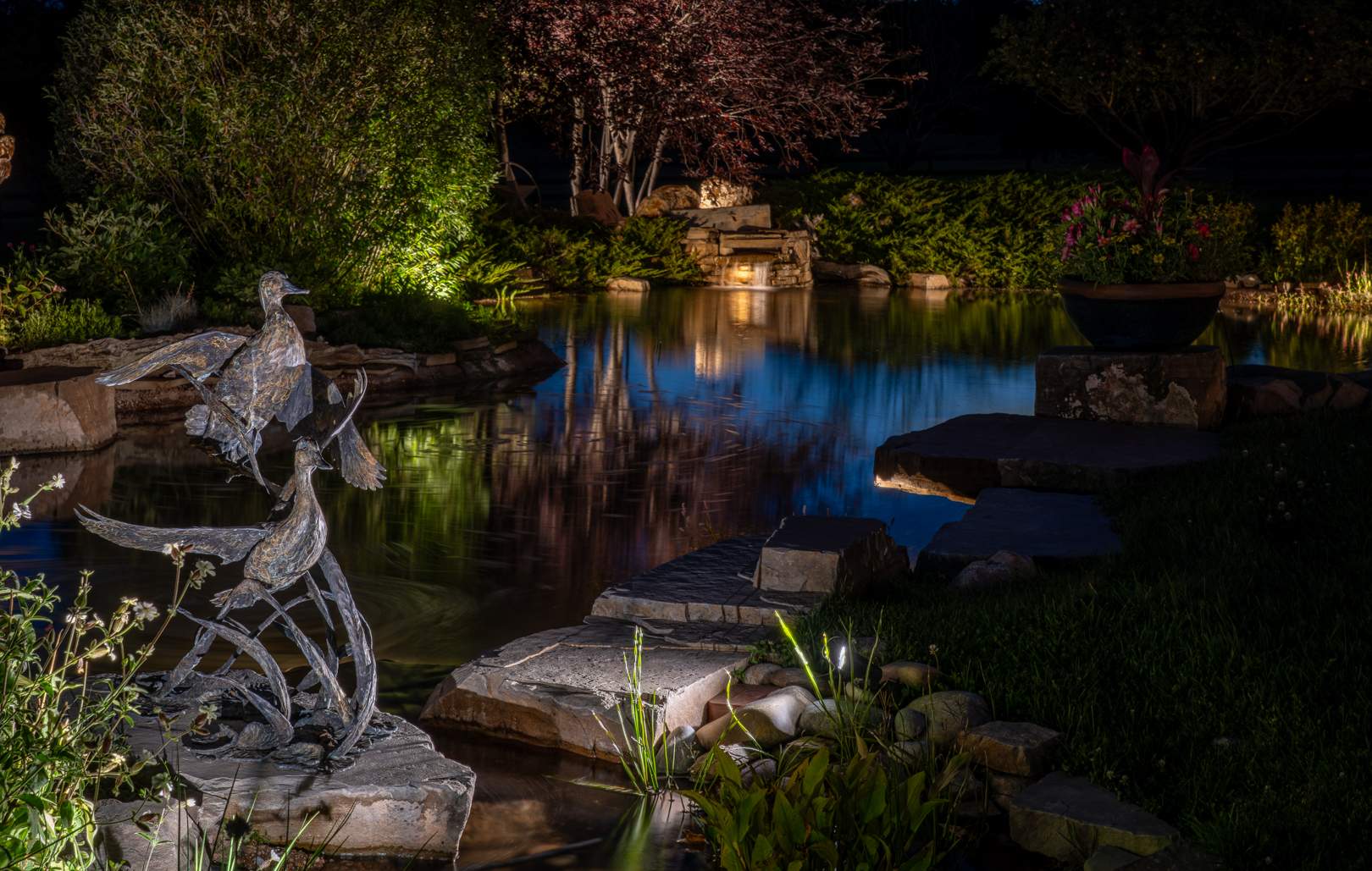
Cross lighting and directional accent lighting highlighted bronze sculptures and artistic focal points throughout the estate.
Extend Outdoor Living Spaces
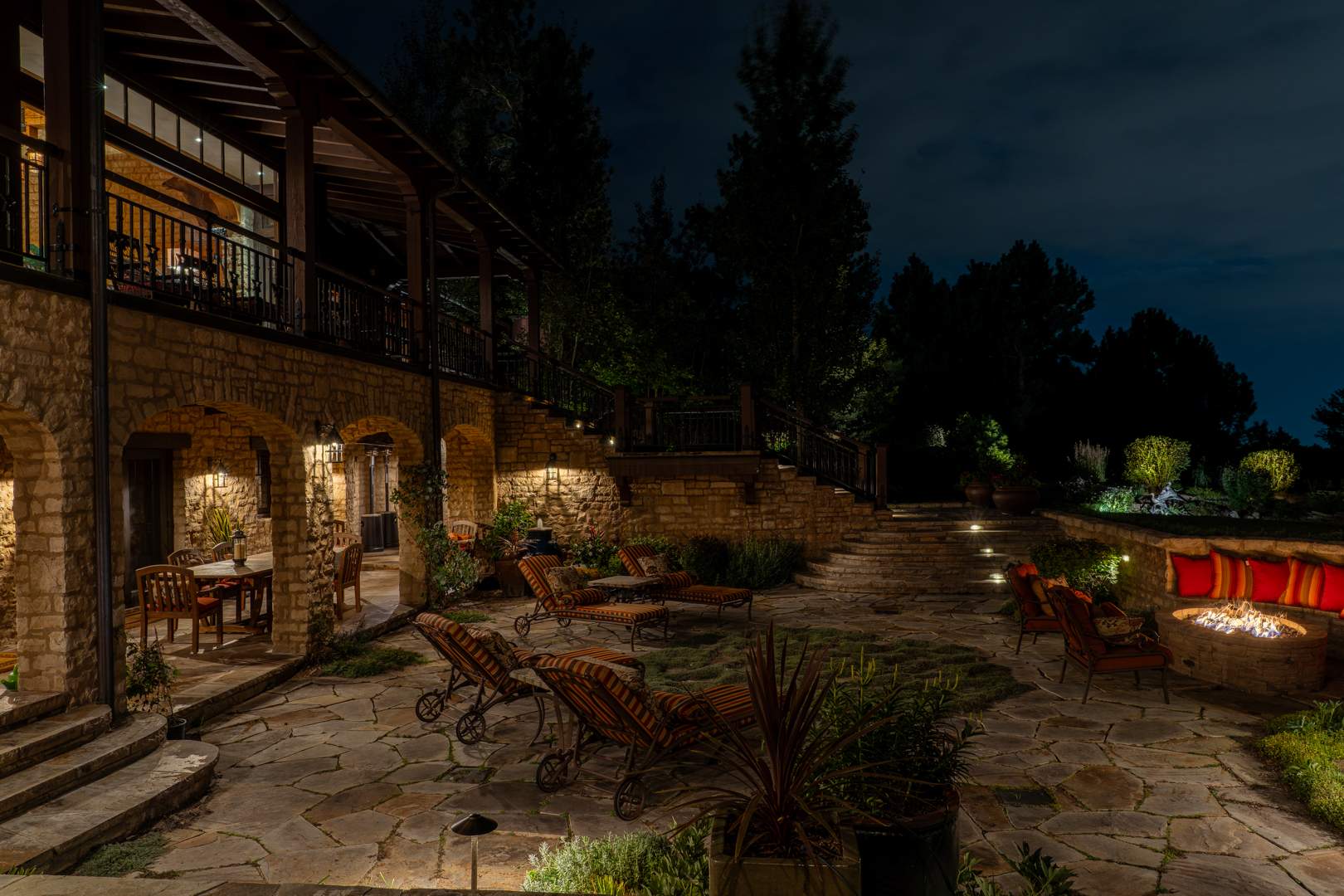
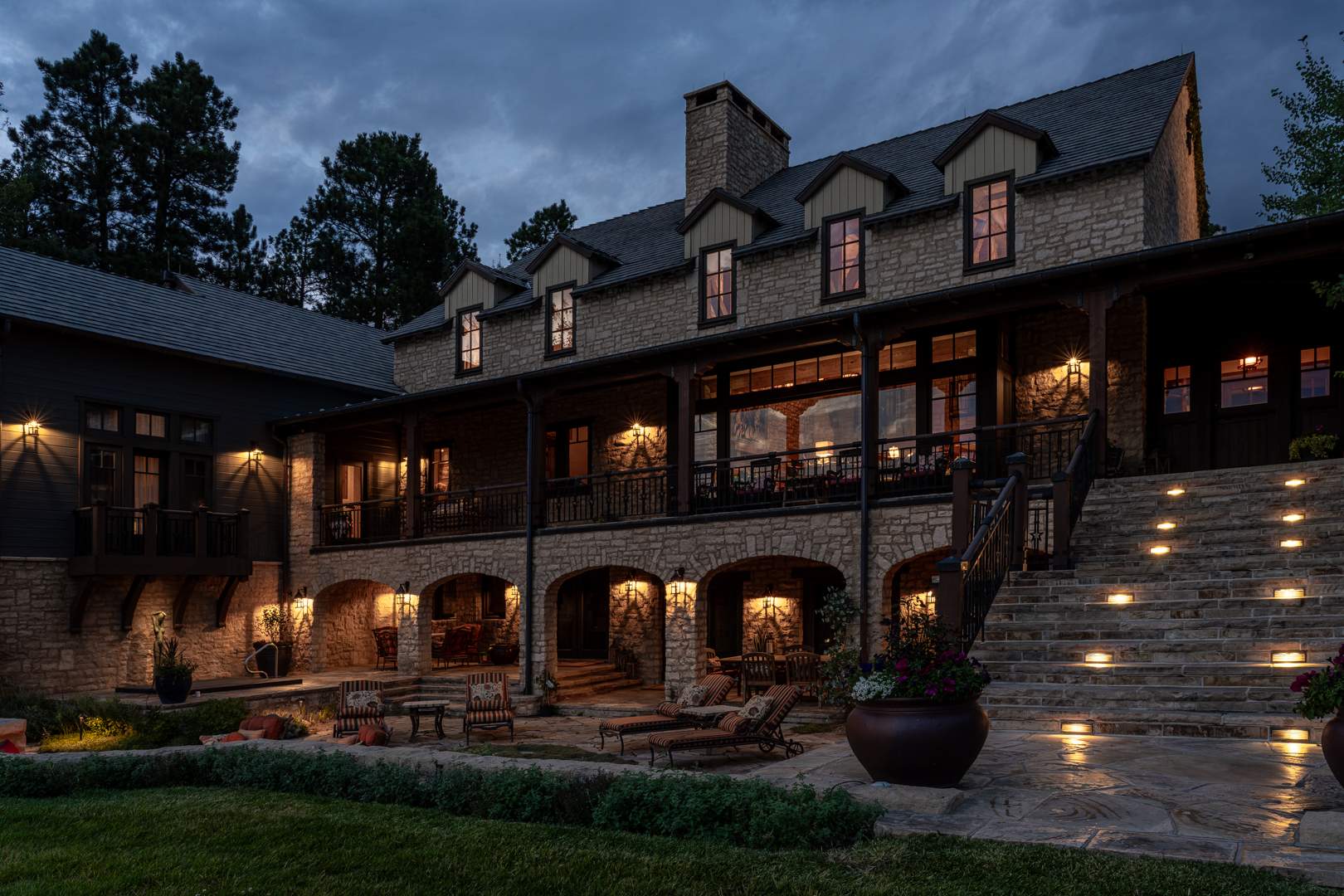
Patios, fire pits, pathways, and gathering areas were designed to feel inviting and usable long after the sun disappeared behind the mountains.
Creating a Luxury Outdoor Lighting Experience
Good outdoor lighting isn’t just about placing fixtures around a property. It’s creating rhythm, balance, contrast, and movement.
It’s the difference between simply seeing a property and actually experiencing it.
Our outdoor lighting team carefully evaluated how light interacted with trees, architecture, water, elevation changes, and surrounding views throughout the property.
The design blended more than 200 outdoor lighting fixtures (and counting) including:
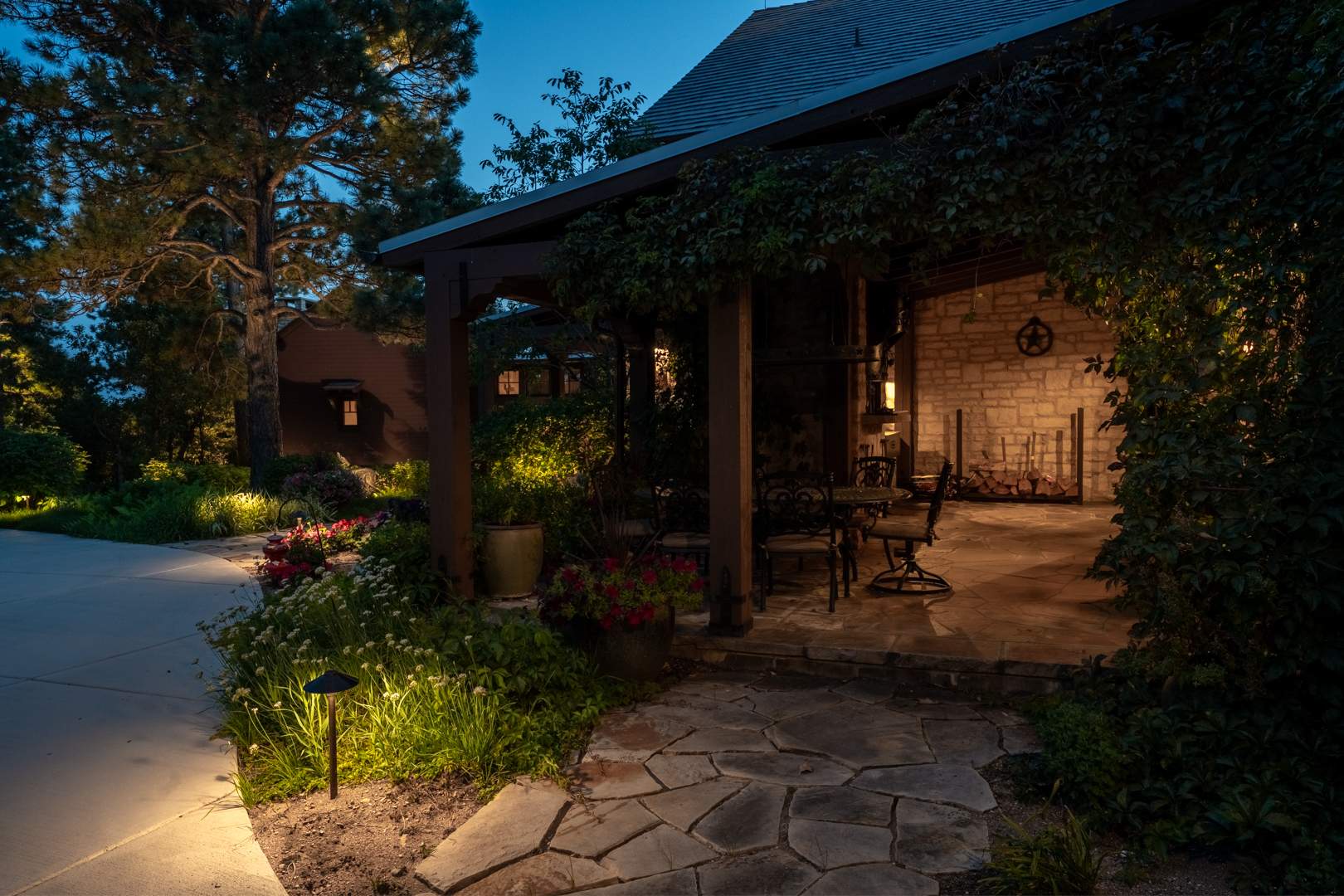
- Path and area lighting
- Recessed well lights
- Architectural wash lighting
- Spot and uplighting
- Tree mounted downlights
- Submersible water lighting
- Smart integrated controls
The result is a layered lighting composition that guides the eye naturally from one experience to the next. Guests move through illuminated pathways toward softly glowing courtyards. Reflections shimmer across the pond surface. Sculptures emerge from the darkness. Water glows beneath stone bridges. Trees cast moving shadows across the landscape.
Nothing feels forced. Everything feels natural.
That’s the magic of professionally designed outdoor lighting.
Why Layered Landscape Lighting Matters

One flood light pointed at a house does not create atmosphere. It creates interrogation room energy. Luxury landscape lighting works because it uses layers.
At Star Ranch, the design combined different lighting techniques to create depth and visual storytelling throughout the property.
Uplighting
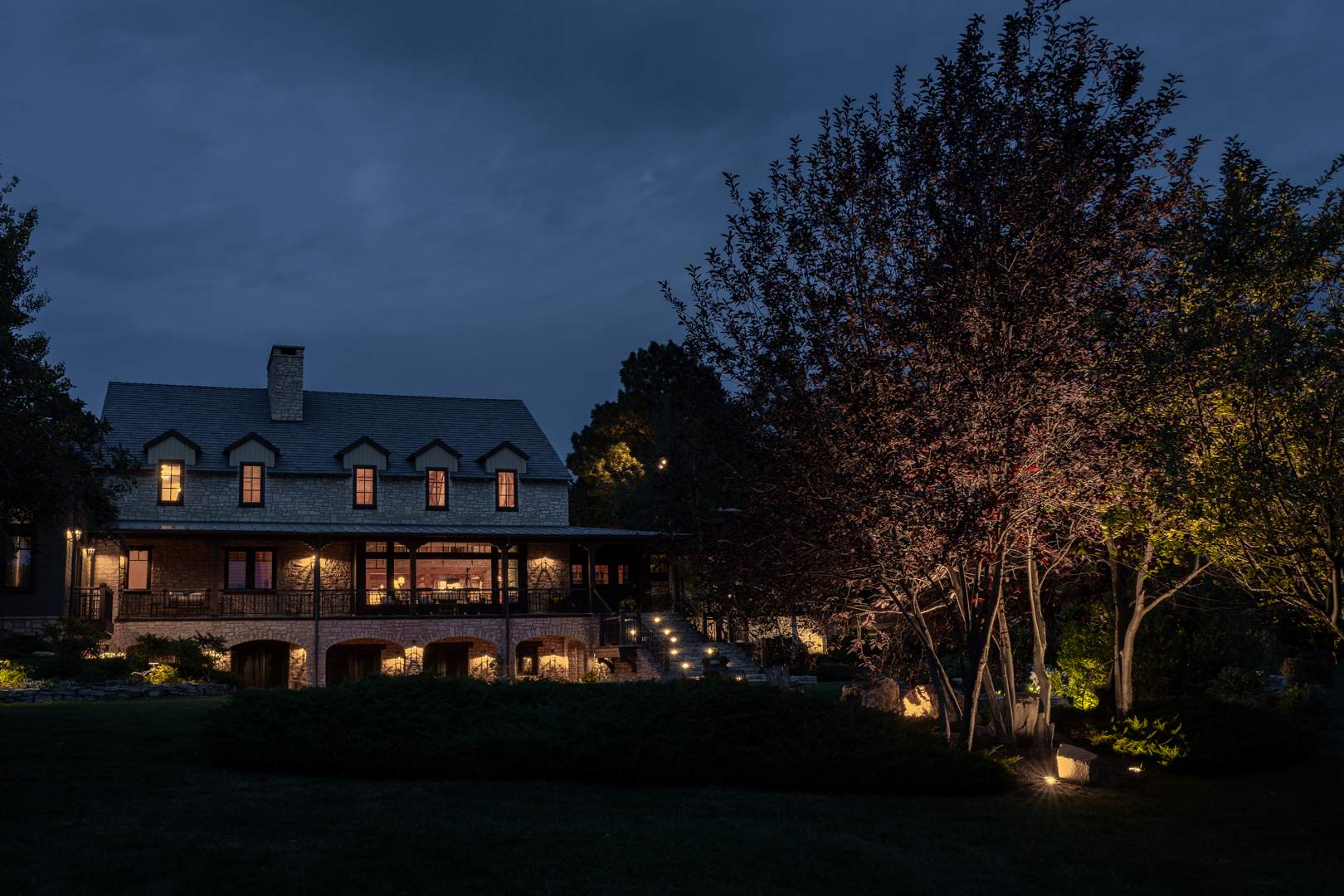
Used to highlight mature trees, native stone architecture, sculptures, and vertical features.
Moonlighting
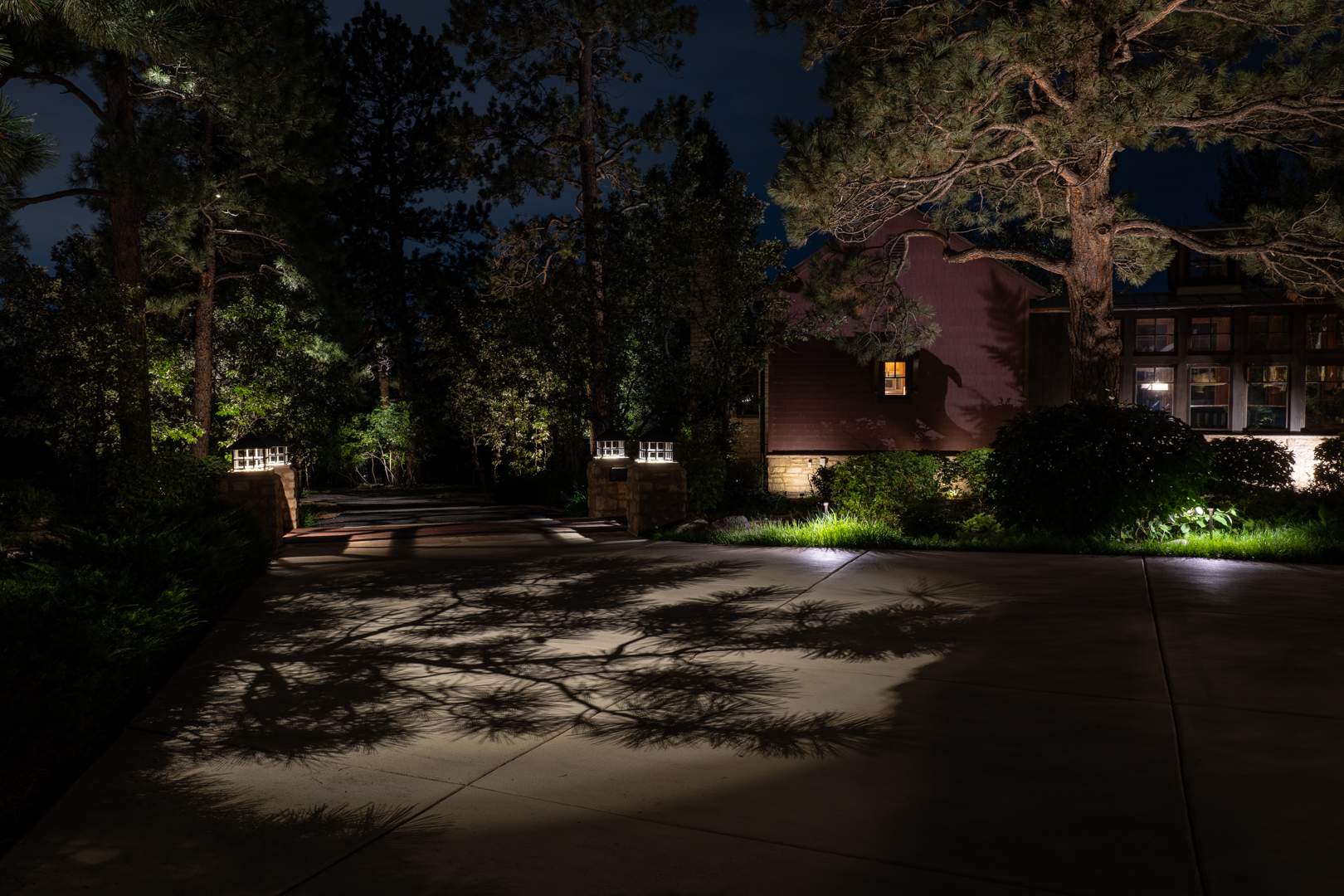
Fixtures mounted high within the trees cast soft downward illumination that mimics natural moonlight filtering through branches.
Submersible
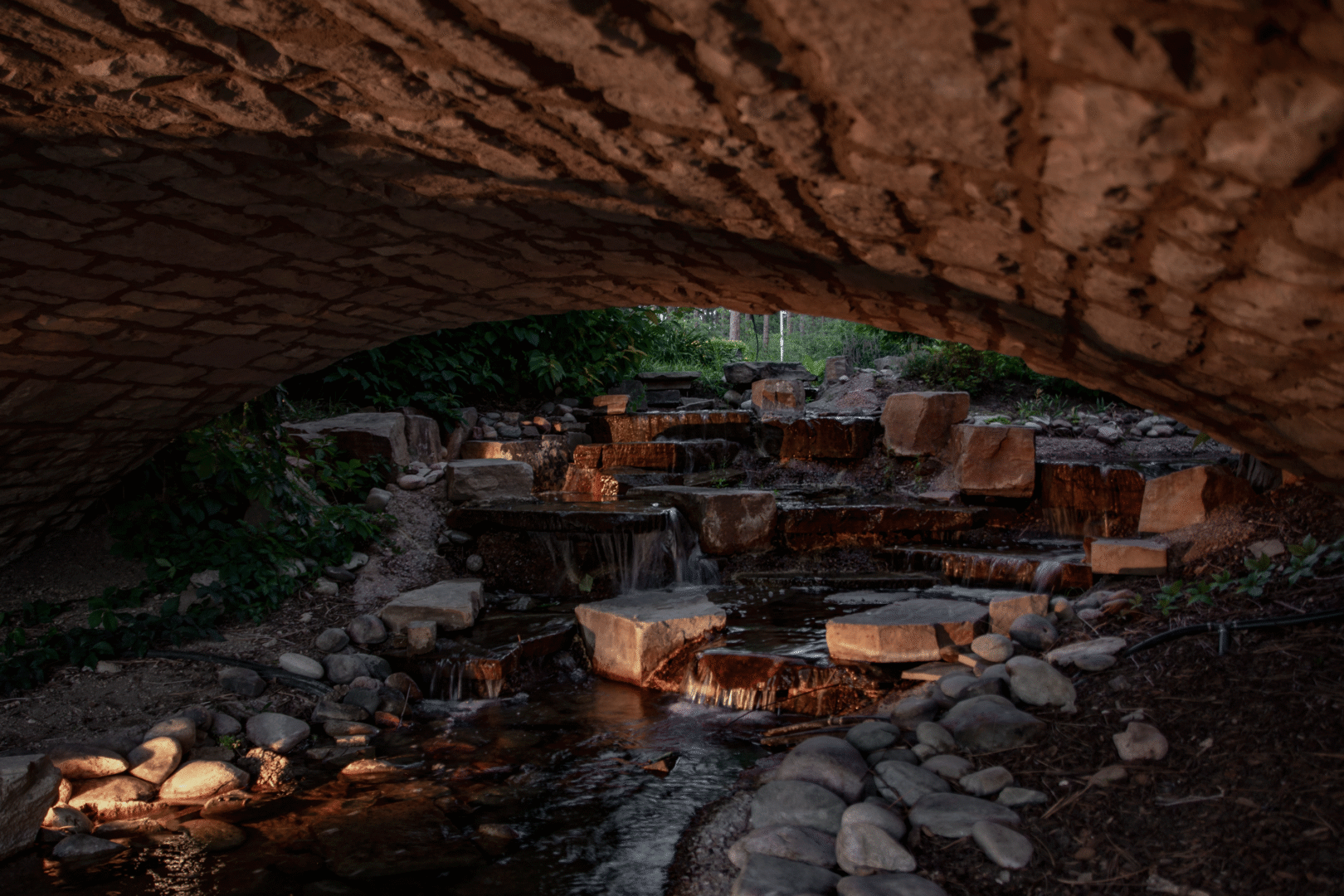
Submersible fixtures beneath ponds and streams enhanced reflections, movement, and nighttime ambiance.
Path Lighting
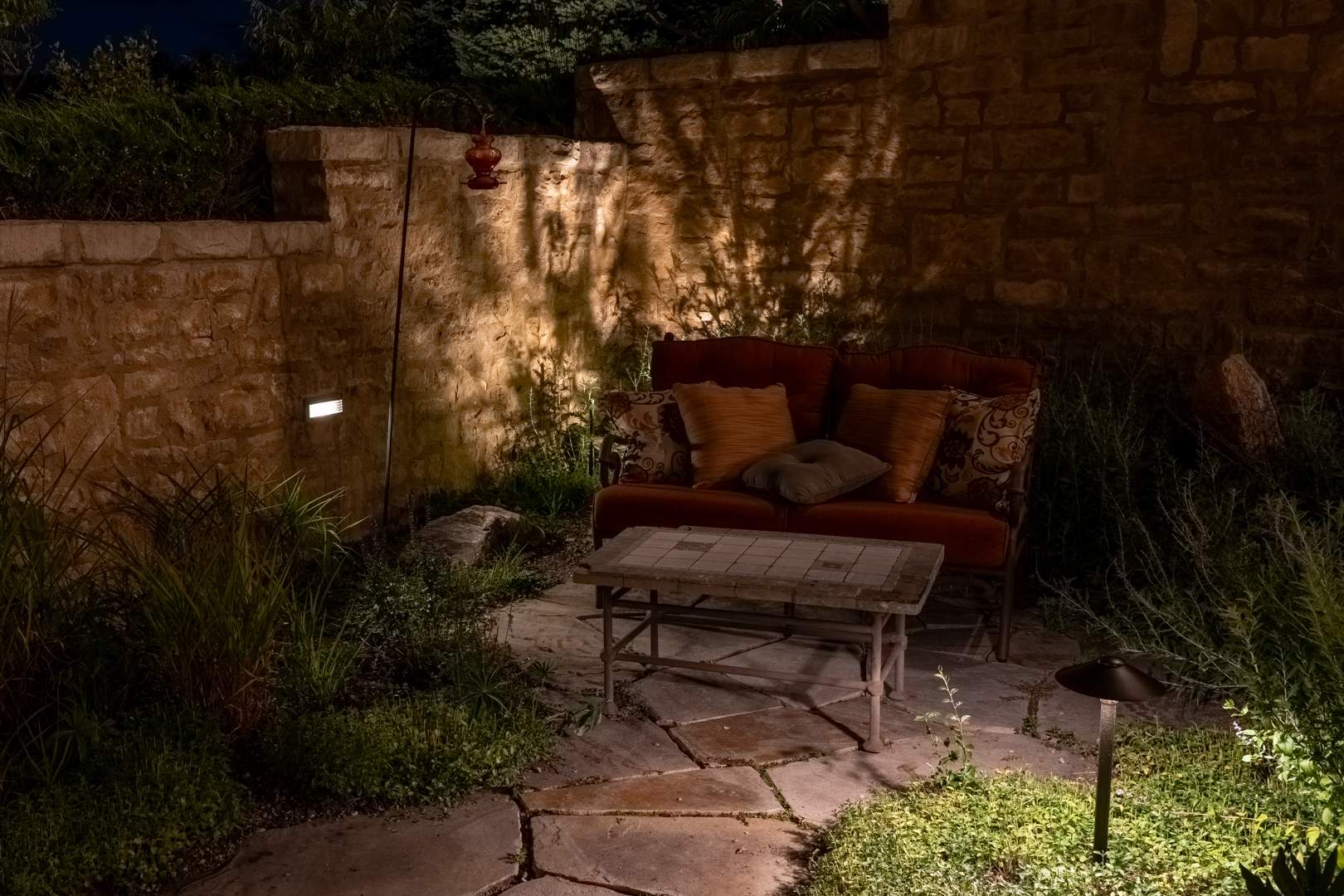
Soft pathway illumination improved safety while guiding movement naturally through the landscape.
Cross Lighting
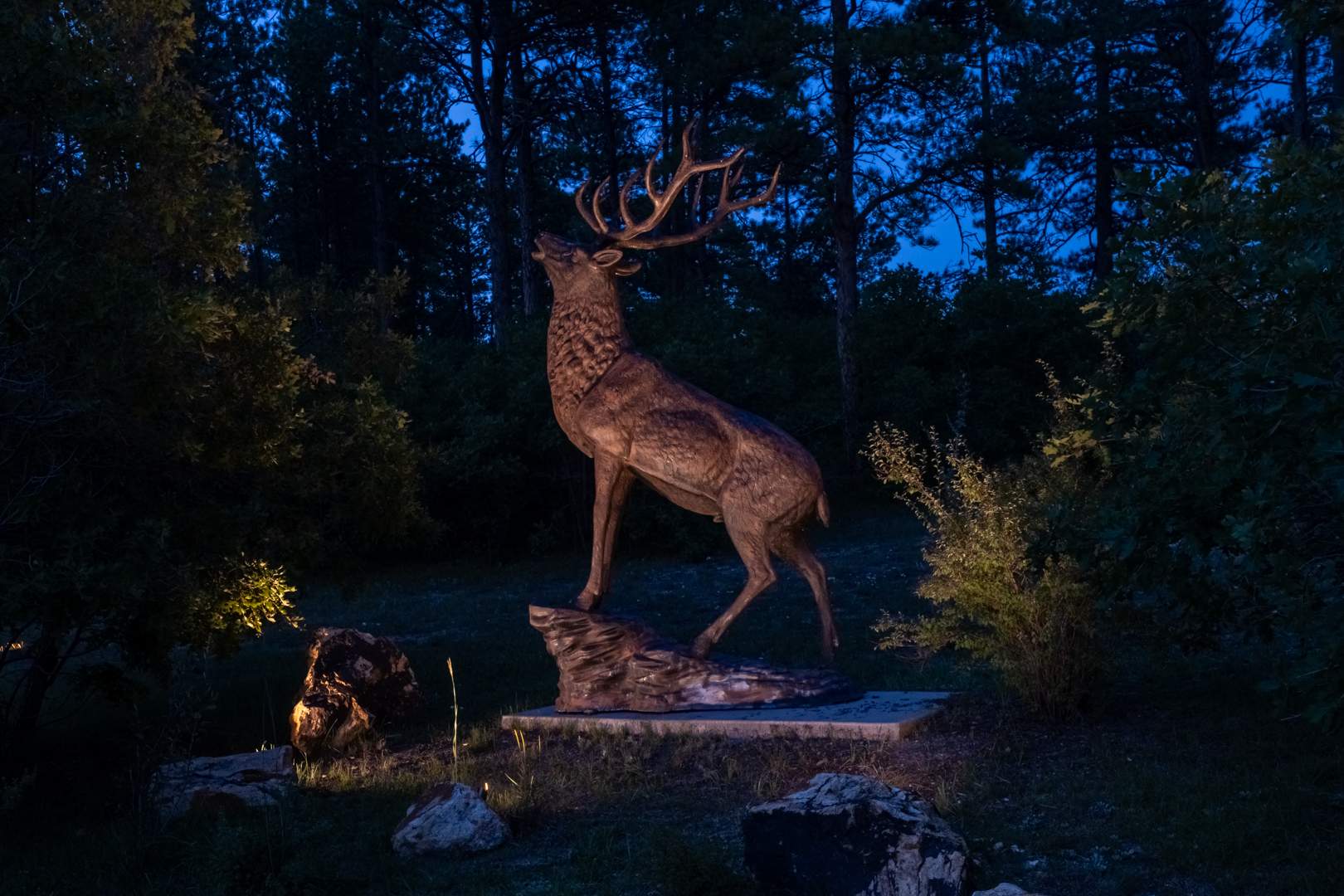
Strategically placed fixtures revealed texture and dimensional detail on sculptures and landscape elements.
The combination creates a property that feels immersive rather than simply illuminated.
Smart Outdoor Lighting With Seamless Control
Luxury lighting isn’t just about beauty. It’s also about convenience. This entire outdoor lighting system was integrated into the home’s smart automation platform, allowing the homeowner to control the property with a single touch.
Because when you own a mountain estate, walking outside to flip fifty switches feels slightly less luxurious.
Outdoor Lighting That Feels Emotional
One of the most powerful parts of this project is something you can’t measure with wattage charts or beam angles.
Emotion.
The homeowner described how the lighting completely changed the experience of coming home at dusk. Water features that people could once only hear now became visible. Pathways became welcoming. Outdoor spaces became calming and immersive.
That emotional connection is what separates basic outdoor lighting from truly exceptional outdoor lighting design.
The best lighting disappears. What remains is the feeling.
I’m Tyler. I am the Plant Healthcare Manager for Front Range Arborists.
I just like to take a couple minutes to talk a little bit about Emerald Ash Borer. It’s an invasive wood-boring insect that was just discovered in the Pikes Peak region this July. We’ve gotten a lot of questions about it, a lot of phone calls, so I’m just going to talk a little bit about where it came from, what it does, the potential impacts that it’s going to have on the ash trees in Colorado Springs, and a little about what we can do to mitigate the effects of Emerald Ash Borer.
The Emerald Ash Borer is an invasive wood-boring beetle that was first detected in the United States in 2002 in a port area near Detroit, Michigan. It was first brought over, we believe, in solid wood packing material from Asia. Since then, it has spread through most of the Midwest and most of the eastern United States. It has caused roughly $12 billion of economic impact and has killed tens of millions of trees in the time since it was discovered.
It was first found in Colorado in 2013, where it had largely been isolated toward the greater Denver and greater Boulder areas until probably about a year or two ago, whenever it really started to spread, and has now been found in El Paso County as of 2026.
The reason why we’re so concerned about the presence of Emerald Ash Borer is because it’s a non-native insect. It has no natural predators, and none of the ash trees in North America have natural defenses against Emerald Ash Borer.
So that means every ash tree is susceptible to some degree, and there’s nothing natural that can control it. One of the major concerns with Emerald Ash Borer being in Colorado Springs is that roughly 15 to 20% of our urban canopy is ash trees. So, a significant loss of ash trees can create a significant impact economically and environmentally in our neighborhood and in our community.
One thing that makes Emerald Ash Borer difficult to control is the fact that it spends most of its life cycle underneath the bark. Adults are only active and visible from about late May, early June into about mid-August. So, in that time, that’s whenever people normally will see them flying around or on their ash trees. But most of the damage is occurring whenever the larvae are feeding underneath the bark in late summer.
The adults will emerge in May and June and will go through a period of maturation feeding, where they will feed on the leaves of the ash tree before laying eggs in early to midsummer. Those eggs will hatch and the larvae will bore into the tree, where they will feed underneath the bark on the cambium, which is the nutrient-rich, live tissue underneath the bark. They’ll remain there until they emerge as adults in the following spring.
As these larvae feed, they create really meandering, almost serpentine-like galleries underneath the bark, which cuts off a lot of moisture and nutrient flow to the tree and will ultimately be the reason why these beetles kill the trees.
Because many of the ash trees in Colorado Springs are already a little stressed, it can be difficult to detect whether or not a tree has been attacked by Emerald Ash Borer. Many of the signs and symptoms associated with Emerald Ash Borer attack are also associated with ash trees that have just been under a high amount of stress for multiple seasons.
Things like thinning canopies and split bark don’t necessarily mean that trees are infested with Emerald Ash Borer, but they are clues that we look at whenever we’re trying to identify trees that might be infested with Emerald Ash Borer.
On top of thinning canopies and split bark, we’re also looking for small, D-shaped exit holes that can be anywhere on scaffolding branches and the trunk or the main stem of the tree. We’re looking in those bark cracks for signs that there might be the feeding galleries of the larvae.
We’re looking for large amounts of what we call water sprouts or epicormic shoots, which are kind of bushy growths coming up from the ground, the trunk of the tree, or even branches of the tree. And we’re looking for woodpecker damage.
All of these things can help us put together whether or not a tree has been infested with Emerald Ash Borer and help us determine if we can treat the tree retroactively or if the tree needs to be removed.
In response to Emerald Ash Borer, there’s several different paths that we can take. I’d like to advise everybody who has large, healthy, mature ash trees to have those trees evaluated to make sure that they’re currently not being attacked and to strongly consider Emerald Ash Borer preventative injections.
These injections are done at the base of the tree. It’s minimally invasive, and the trees are injected all the way around the base of the tree. The chemical is taken up by the tree, distributed through the tree, and that will protect the tree for about two years.
A little bit of an investment now can help protect these large, mature, healthy trees into the future.
Trees that are maybe not in the greatest of health, that might be infested, or in otherwise poor growing areas, can be candidates for removal or removal and replacement. We can always get a tree replaced with a non-susceptible species like maple, oak, or honey locust and kind of save some of that heartache later.
Emerald Ash Borer carries a fungus called white rot, which is very detrimental to the structure of trees that have been killed by Emerald Ash Borer. What this does is it weakens the tree so much that it will essentially begin falling apart after a couple years.
So, if you delay in getting your ash tree removed after it’s been killed by Emerald Ash Borer, it can become quite a hazard and be very difficult and even more costly to remove in the future.
If you believe that your ash tree has been infested, or you think that your ash tree might become infested, or if you just have a high-value ash that you’re looking to have protected, give Front Range Arborists a call.
We’ve got plenty of arborists with Emerald Ash Borer experience, and we would love to help you out in keeping your ash trees healthy and help mitigate the effects of this pest as it makes its way through the Pikes Peak region.
National Recognition for Outdoor Lighting Excellence
This luxury outdoor lighting project was nationally featured in Landscape Architect and Specifier News magazine for its artistic integration of architecture, landscape, high end outdoor lighting, and natural surroundings.
The project demonstrates how professional outdoor lighting can completely transform the way a property functions and feels after sunset.
From towering pines and native stonework to ponds, sculptures, and outdoor living spaces, each element was designed to work together as one cohesive nighttime experience.
Explore More Luxury Outdoor Lighting Inspiration
Whether you want to illuminate a mountain estate, highlight architectural details, create safer pathways, or transform your backyard into a nighttime retreat, professional outdoor lighting can dramatically change how you experience your home.
Learn More About Outdoor Lighting:
Ready to Transform Your Property After Dark?
Good Read? Share With A Friend!
Other Helpful Posts
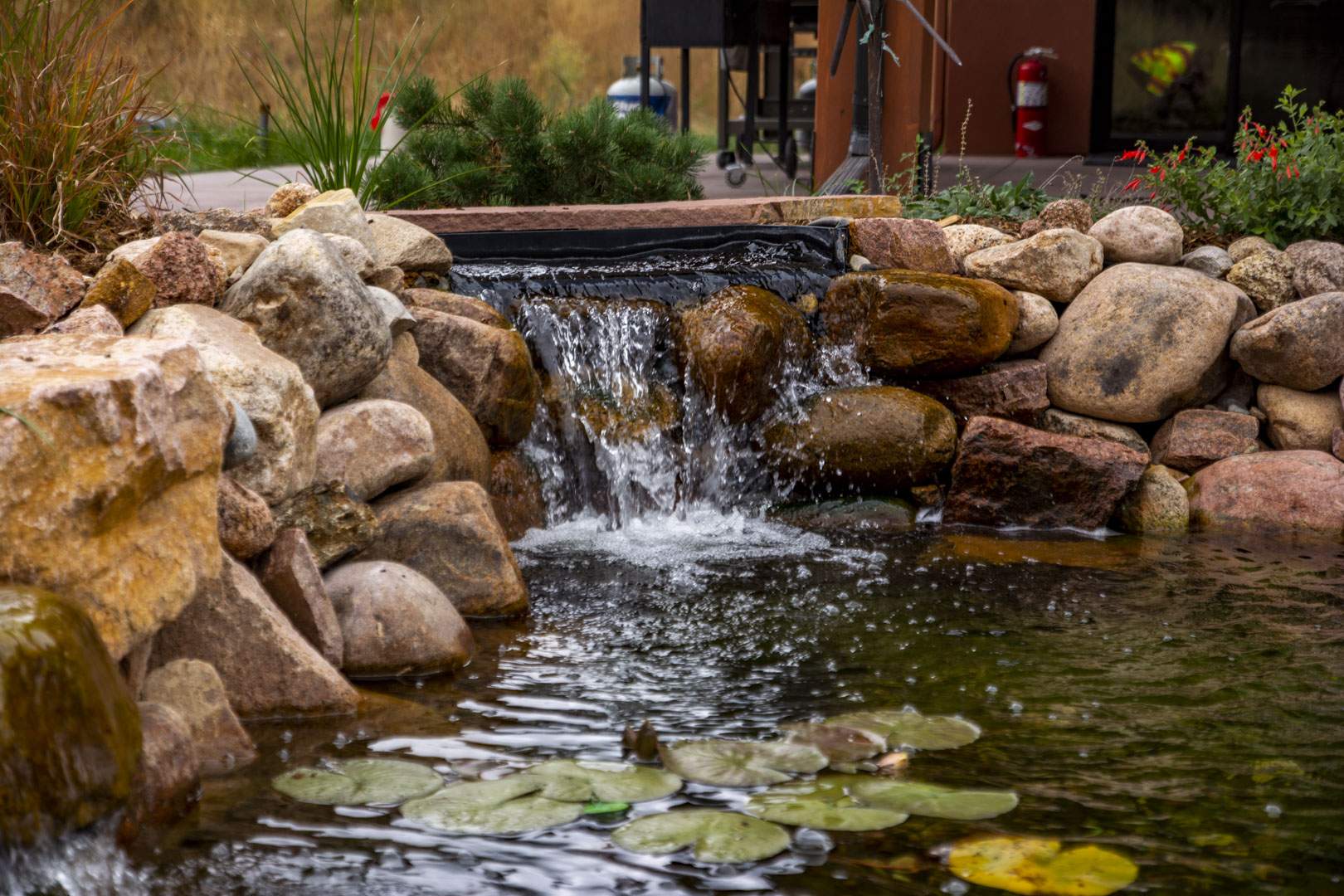
Close your eyes. Does your dream landscape include the soft sound of a water feature bubbling in the background while you enjoy relaxing in your outdoor living space? Most of us feel a strong pull toward water – and well-designed water features…
When you love your landscaping, you want to enjoy it much as possible, right? So why limit that to daylight hours? Landscape lighting brings out the best of what you’ve got by highlighting your home’s architectural features…
In a Colorado Springs winter, it’s enjoyable to go outside to ski or play in the snow. However, what if you just want to relax outside with friends and enjoy the snowy view? When it’s cold out, relaxing outdoors can seem out of the question, but it’s not…