
So your water bill has been a bit high and the lawn maintenance is taking up a lot of your time, or maybe you just want your landscape to be more environmentally friendly as you try to reduce your environmental impact and help the bees.
Whatever your reason for going green, the switch is well worth it and doesn’t have to be difficult. Below are 7 things you can do to make your Colorado landscape more eco and environmentally friendly.
Table of Contents
Why is eco-friendly landscaping important?
When making the switch to a more sustainable landscape, the goal is to reduce waste, reuse non-toxic materials, and recycle.
As much as 50% of water usage occurs outdoors for irrigation and a significant amount of that is wasted (as much as 50%). By using more sustainable methods in your landscaping, such as selecting native plants and utilizing smart irrigation, not only does your yard become more sustainable, but you’ll also see significant cost savings.
Moving from a more traditional landscape to a low environmental impact one will help the eco-system, both local and beyond. Native landscaping supports local flora and fauna including pollinators. Larger systems are impacted because sustainable landscapes reduce water runoff which pollutes streams, lakes, and other bodies of water.

7 Eco and Environmentally Friendly Landscape Tips
1. Reduce or Substitute for High Maintenance Options
Lawns can take a lot of time and resources to maintain due to the consistent mowing, fertilizing, water usage, aerating, reseeding, and irrigation system checks and repairs.
A lawn can be substituted with artificial turf which conserves water, is low maintenance, and hardy. With lawns and turf, there is a trade-off because a lawn will provide a lot of clean oxygen while turf has a higher initial cost but lower long-term cost. It can also be substituted with native shrub beds which can save as much as 20-40% on water usage and bees love them.
Your lawn may be an important place where kids and pets play. In that case, reducing the size of the lawn may be a better option as opposed to replacing it.
Analyze your property and the maintenance, time, and resource requirements of specific elements. Do these items use a lot of resources? Do they cause excessive water runoff or use non-native plants? If the answer is yes, think about what you can do to reduce or replace these elements.
2. Start Composting
Composting is an excellent way to start living green. It helps to reduce the amount of waste that goes to landfills, reuse the material for fertilizer, and recycle your organic materials. Compost is an amazing nutrient-rich fertilizer that is great for plants. Create a compost bin and place the following items in it:
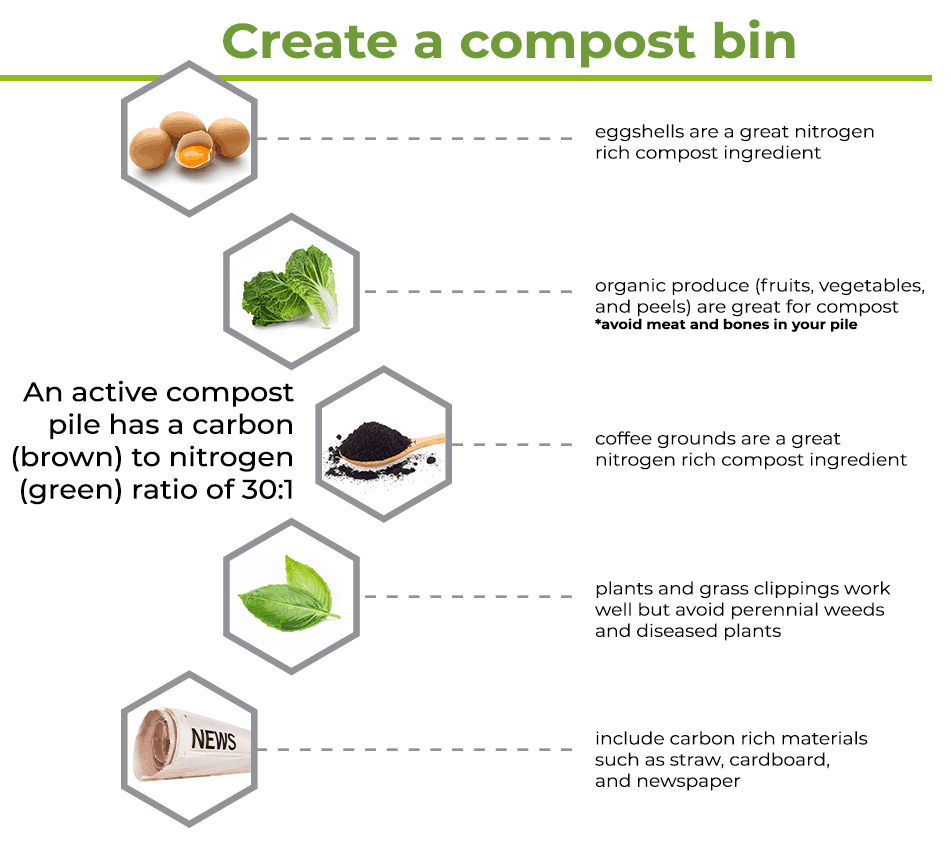
- Organic produce
- Tree leaves and grass clippings
- Coffee grounds
- Eggshells
- Newspaper
Do not use any animal bones or scraps and avoid using non-organic produce. Learn how to create your compost pile here:
3. Use A LOT of Mulch
Not only does placing mulch around your plants and in bare areas make your yard look well-kept, but it can also significantly reduce water waste.
When you water your plants, the mulch holds in moisture, allowing you to water less frequently. The mulch also reduces evaporation, which is a major cause of water loss in Colorado’s arid climate. Mulch reduces erosion and runoff which can pollute water systems.
Timberline’s mulch standard is 3 inches deep. It should also be refreshed by adding a new layer every couple of years. Utilizing mulch is a great simple and budget-friendly step you can take to make your property more sustainable.
4. Consider Low-Impact Pest Care
When caring for your landscape and garden, think about using non-toxic, organic fertilizers and pesticides. These options will improve the quality of produce from your veggie garden and improve the overall soil eco-system.
When it comes to pest management, it is best to be proactive versus reactive. Raising healthy plants in nutrient-rich soil helps them to be more resistant to pest attacks.
You can also use plants as pest control. Marigolds repel aphids and mums repel multiple pests. If your garden has a certain type of pest each year, find out what types of plants naturally repel that pest. There are also a number of plants that are deer resistant.
5. Choose the Right Plants
When choosing plants for your property, it is important to choose plants that are well adjusted to your climate. We recommend planting native plants and those that thrive in your zone. Native plants support our local eco-system, attract pollinators, and are already well adapted to the soil type and climate conditions. We recommend purchasing native plants from a local nursery.
Consider the following in your plant selections:
- XERIC PLANTS:
- Xeriscaping uses plants that conserve water and are environmentally friendly. These plants are especially great for the eco-system, attract pollinators, and are easier to maintain.
- FLOWER SELECTION:
- When selecting flowers for your garden, design using xeric perennials such as catmint, salvia, lavender, and more. Annuals typically require more water and maintenance than perennials so they are not the best choice for eco-friendly landscapes.
- GROUPING AND VISUAL APPEAL:
- Group your plants based on similar water requirements to prevent over- and under-watering. For visual appeal, plant plants in a staggered pattern with tall grasses and shrubs in the back, then perennials, followed by ground cover plants.
- TREES FOR ENERGY EFFICIENCY:
- Trees planted near a home in the right location can reduce electricity bills by providing cooling shade in the summer and a wind-break in the winter. Trees also help the eco-system by providing safe habitats for squirrels and birds.
- EDIBLE GARDENING:
- Growing an edible garden can help you enjoy more organic produce and save you money on groceries. Attract pollinators by companion planting with flowers.
6. Use Energy-Saving Lighting Options
Lighting up your property at night is a great way to keep it safe and extend the hours you can enjoy it. Switch out your lights for energy-saving LED or solar power lights for low-environmental impact lighting.

7. Switch to a Smart Irrigation System
Efficient watering is a great way to make your landscape more eco-friendly. Smart irrigation controllers save money, automatically adjust based on local weather, and water your plants the right amount. With efficient drip irrigation systems and watering schedules, smart irrigation works to reduce water runoff and waste.
These are just some of the ways you can make your Colorado landscape more eco and environmentally friendly. Start small and continue to improve your property over time. Enjoy the process, cleaner air, and cost savings. The eco-system will thank you!
Colorado Springs Utilities offer rebate programs that can help you save money and reduce water waste.